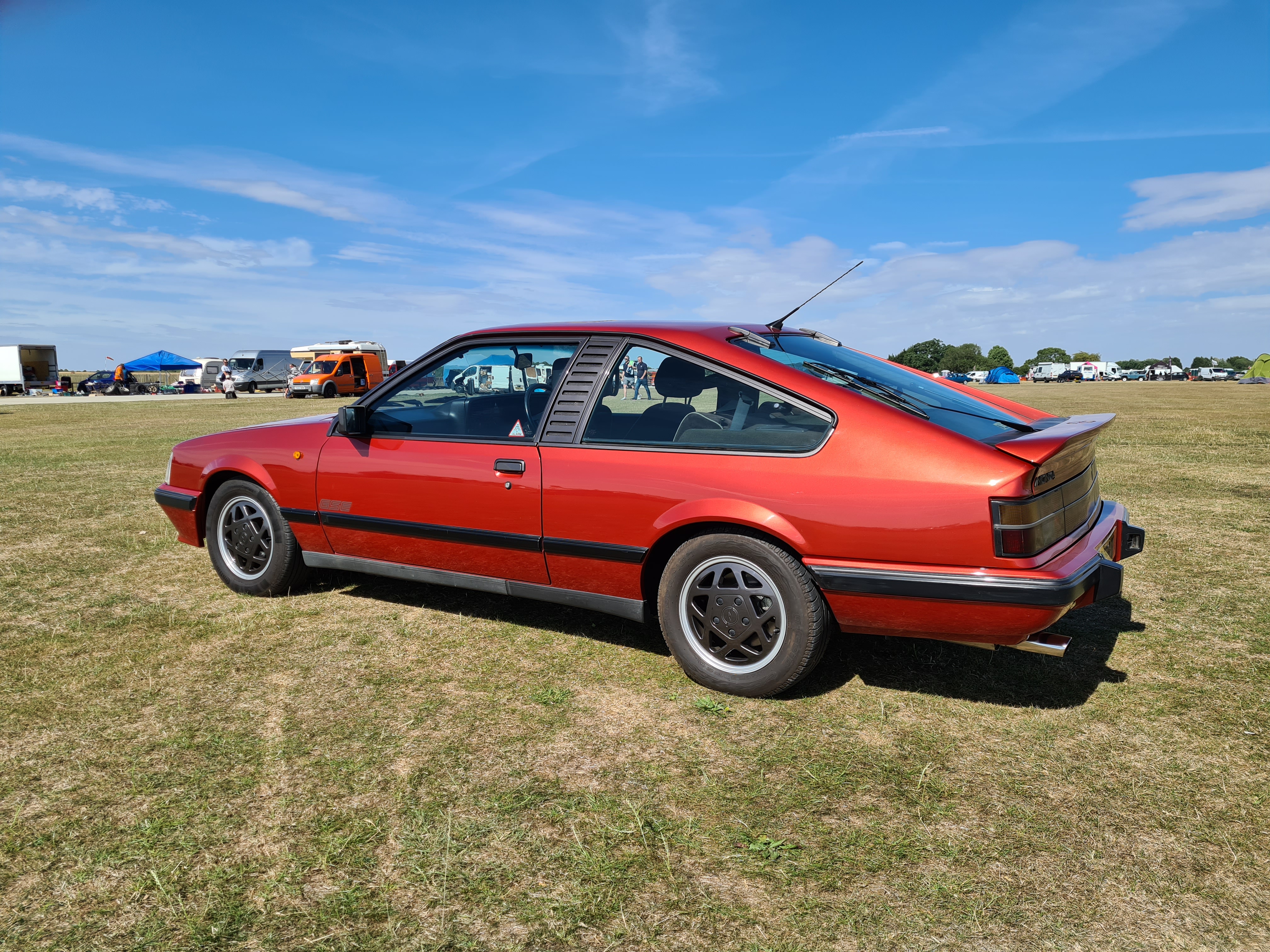
The Opel Monza often seems to get compared to the Ford Capri but the Monza was a far superior beast to the ‘Dagenham Dustbin’ in my opinion with better looks, handling and in most cases performance. The ‘Crapi’ 2.8i was marginally quicker but it still had that same old antiquated horse-and-cart rear suspension that came out of the Ark.
When I first saw the Monza and its Vauxhall cousin the Royale Coupé it was love at first sight and I knew I had to have one. I owned a Series II 3.0E for a couple of years in the mid-Eighties but then children came along and I had to bow to the inevitable and swap it for something a bit more practical with more than two doors. However the car I always wanted was the Monza GSE with that cool digital dash. That desire never went away and after years of pondering and looking I finally acquired one (above) in October 2013.
In their day these cars were pretty quick but nowadays your average yobbo in a hot hatch will leave a Monza standing. However speed isn’t everything of course. I don’t really know why I like these cars so much but those are human emotions for you I guess. I love the fastback styling and the understated spoiler on the back – so much more classy than that brash Essex Boy ‘whale tail’ on the back of the Sierra XR4i. With its digital LCD instruments the Monza GSE “truly was a child of the Eighties” as one of the Autobahnstormers club members once said to me, and who knows – one day it might yet become a true classic.
Unfortunately Monzas were quite well known as being rust-buckets and my car was no exception, being badly afflicted with the tin worm after thirty years. These cars never were very common on British roads but now they are rarer than hens’ teeth as most of them have simply fallen to bits. A mate of mine once described my car as a “good ten-footer”, i.e. it looked OK from ten feet away. However once you got close up you could see that things weren’t quite so fine and dandy. I knew all of this of course when I bought the car; the previous owner made no secret of the fact that it needed restoring. But faced with the problem of owning a car basically containing more holes than a lump of Swiss cheese, what to do?
After a fair bit of investigation and asking around I decided to give the job of restoring the car to JEB Commercial & Car Ltd. in Cannock in the West Midlands on a do-it-in-your-spare-time basis. Paul and Andy at JEB are both Monza enthusiasts who know the cars very well and Cannock is relatively easy to get to from where I live, so it seemed like a good choice. The car was delivered to JEB at the end of June 2015, regaining her MOT in March 2020 and she is now back in circulation trundling around the country lanes of North Essex – when the weather is dry of course!
My car used to be completely standard in that it’s a five-speed manual and doesn’t have any of the optional extra toys like an electric sunroof, ABS or air-conditioning. However all that changed in 2025 when I had the engine swapped for the more powerful 24-valve version from the later Senator B. This is a fairly common conversion and gives a significant performance uplift. Had the Monza had an extended production run like the Manta did it probably would have ended up with this engine as standard. Coupled with the fact that being a manual the car is a bit more fun to drive than the more common automatic version, the extra power should increase the fun factor considerably!
Below is a summary of the restoration process over the years:
September 2016
Work has finally started on the old girl after a bit of a delay. Paul at JEB has been inundated with a batch of horse-boxes to refurbish of all things – I do hope he doesn’t get the two projects confused!
The car is in a bit of a bad way and it was a close call as to whether it was worth restoring at all apparently, but fortunately Paul and Andy decided that the answer was yes. I aim to go up and check up on her in another six months to see how she’s getting on.
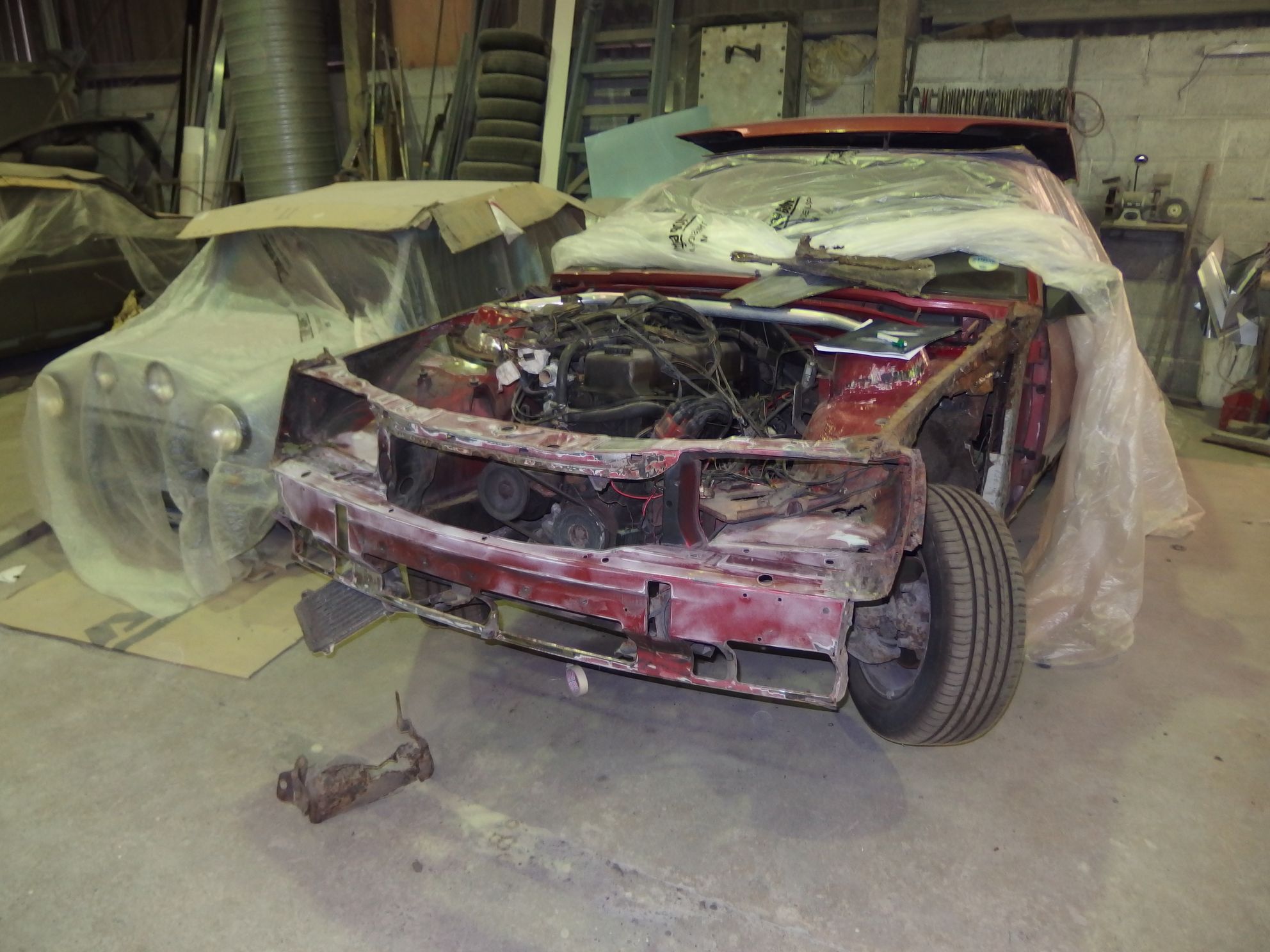
It’s also becoming clear that some previous ‘restoration’ work done on the car before I bought it has in places been a bit of a bodge. There are parts of the inner wings where new metal had just been welded straight over the top of corroded areas, with the result that Paul is having to hack all of the bodged stuff out first in order to get at the rust.
March 2017
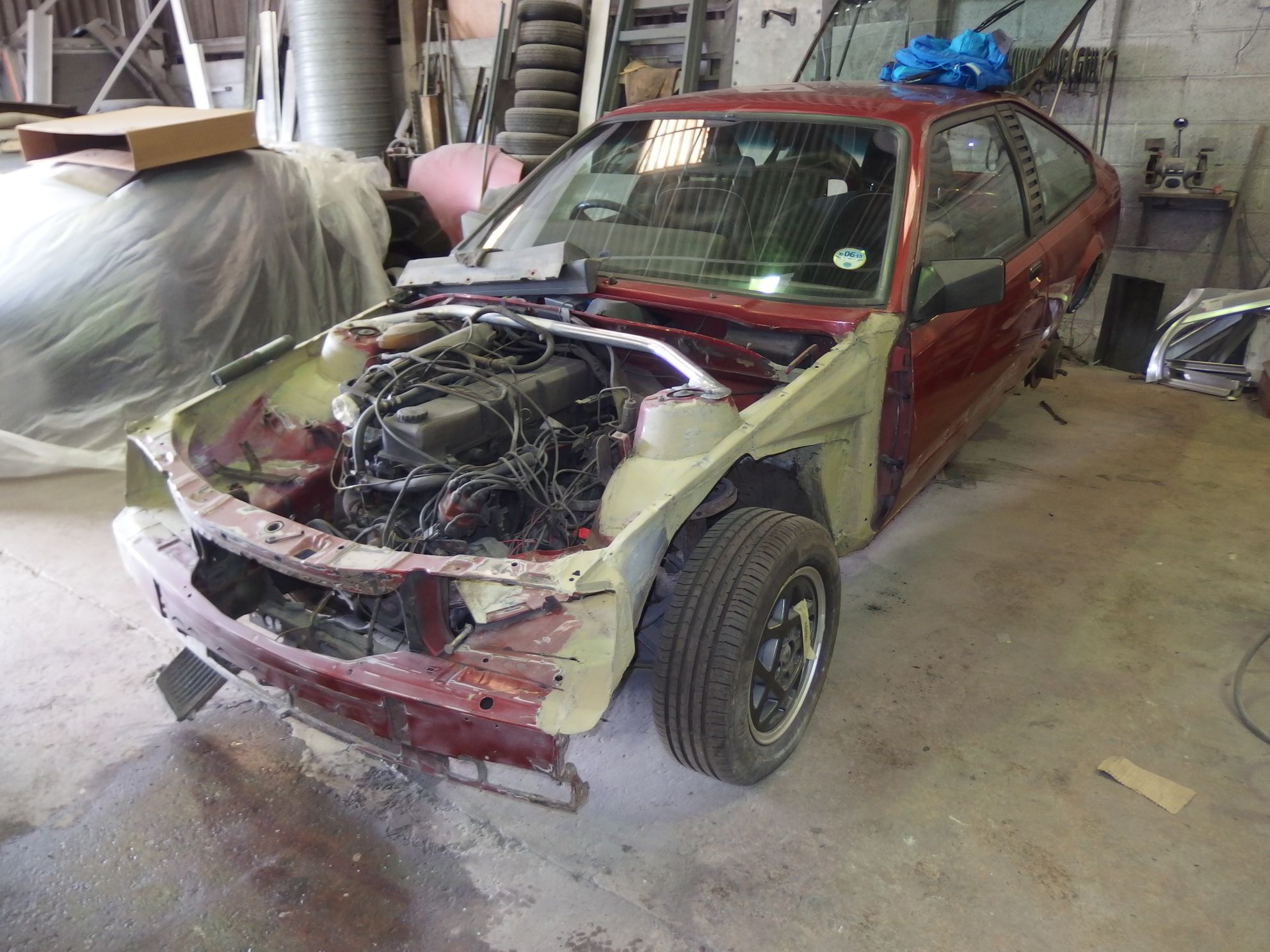
Some progress on the front of the car, mainly on the notoriously corrosion-prone suspension turrets. I want to keep that bracing strut on the suspension as I think it looks pretty cool!
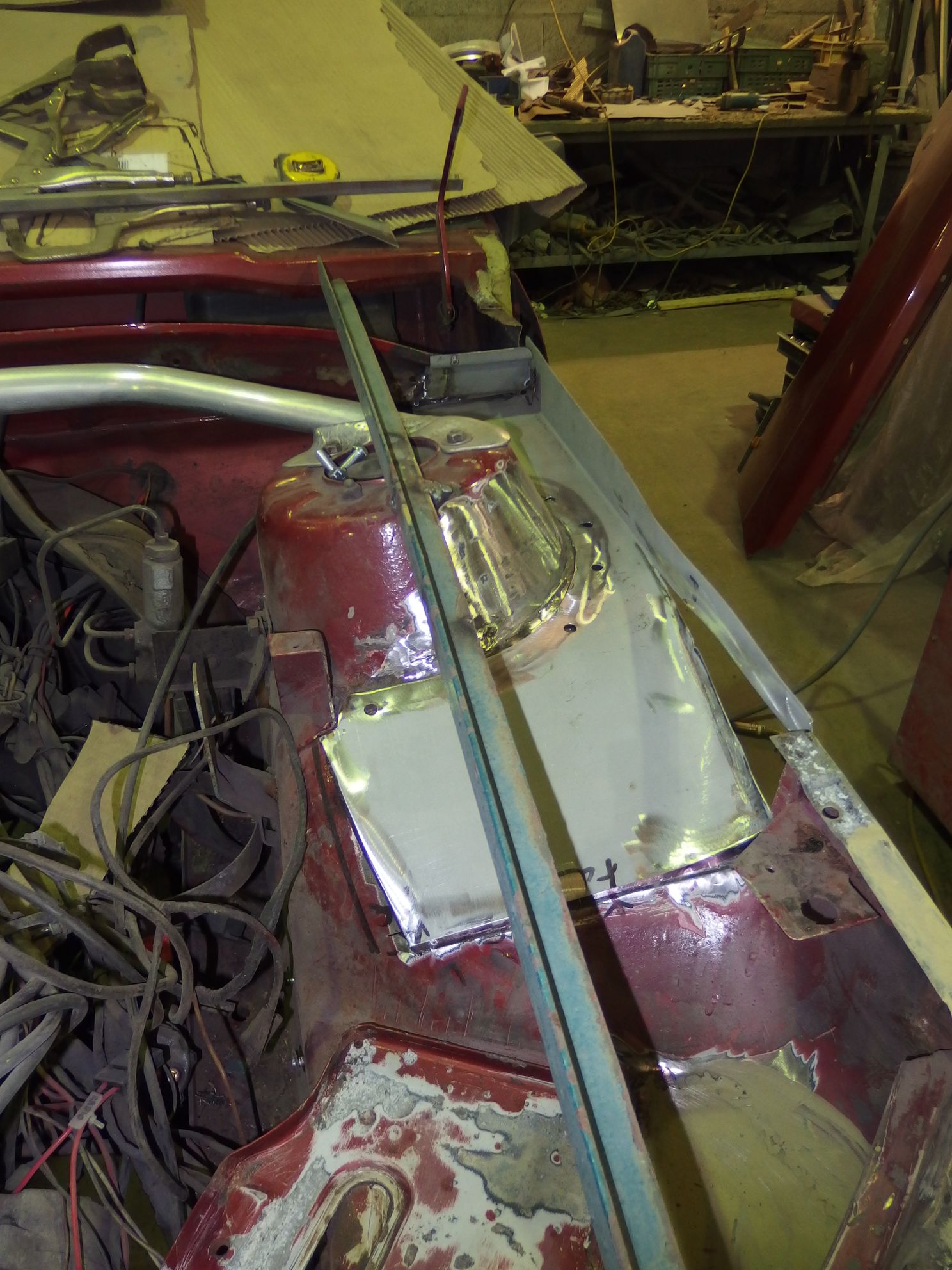
Meanwhile the offside front inner wing has been repaired with a new hand-fabricated inner-wing brace as the GM originals are virtually unobtainable, and all rusty sections replaced with new metal:
September 2017
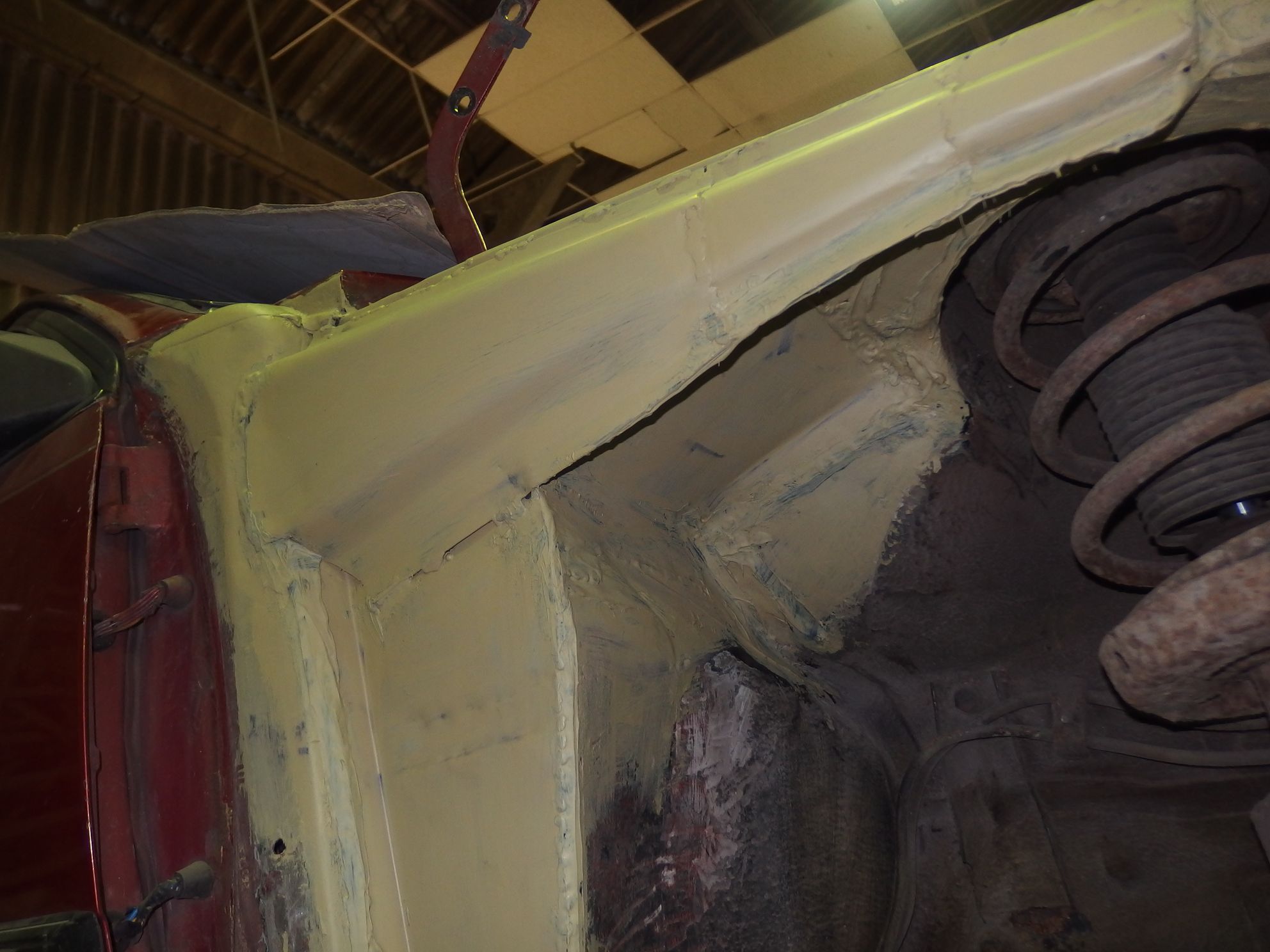
The repair work on the front of the car is largely completed. The nearside wing now has its new inner-wing brace as well. There’s some filling still to be done and the primer to go on but we’re nearly there:
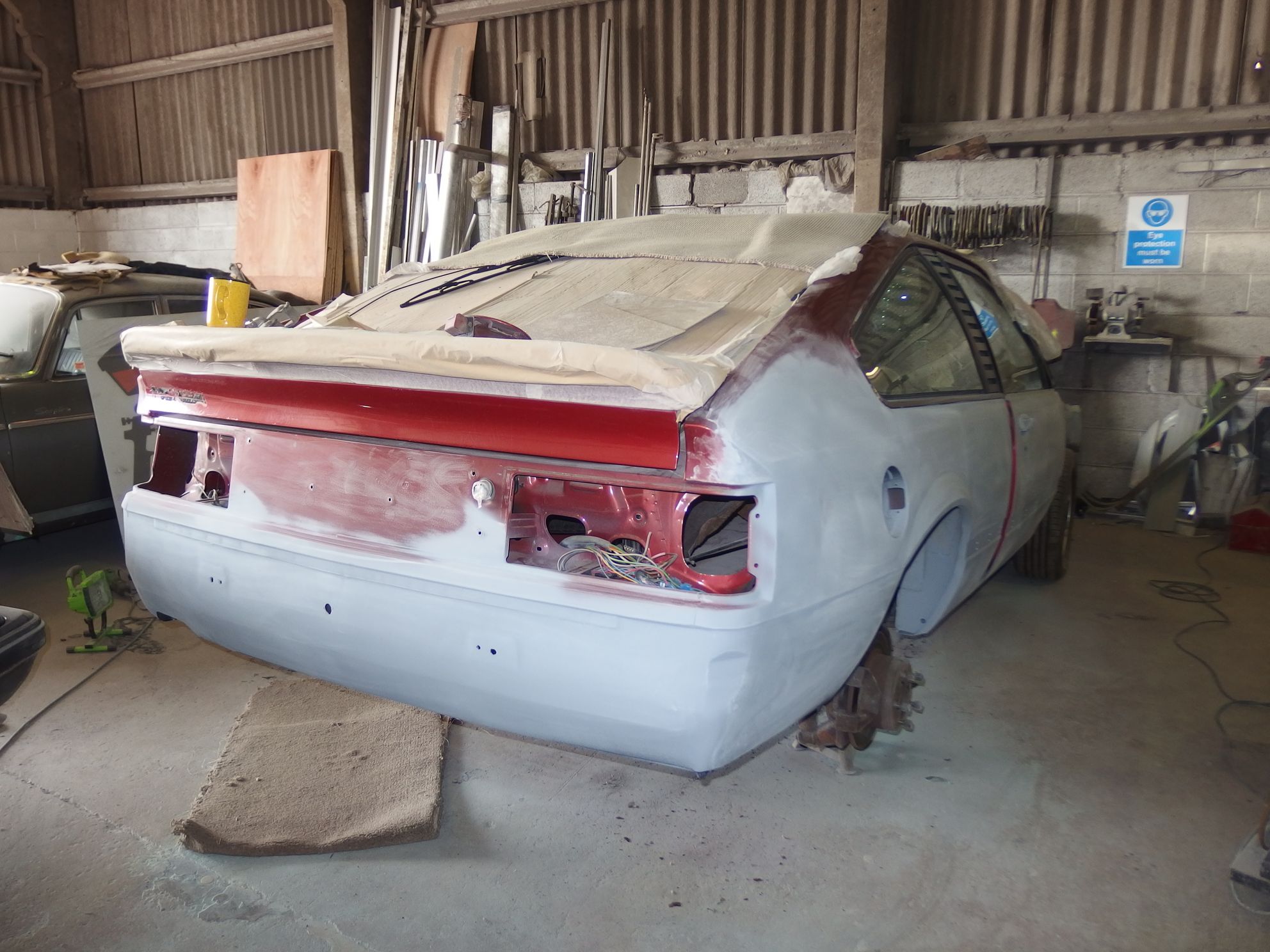
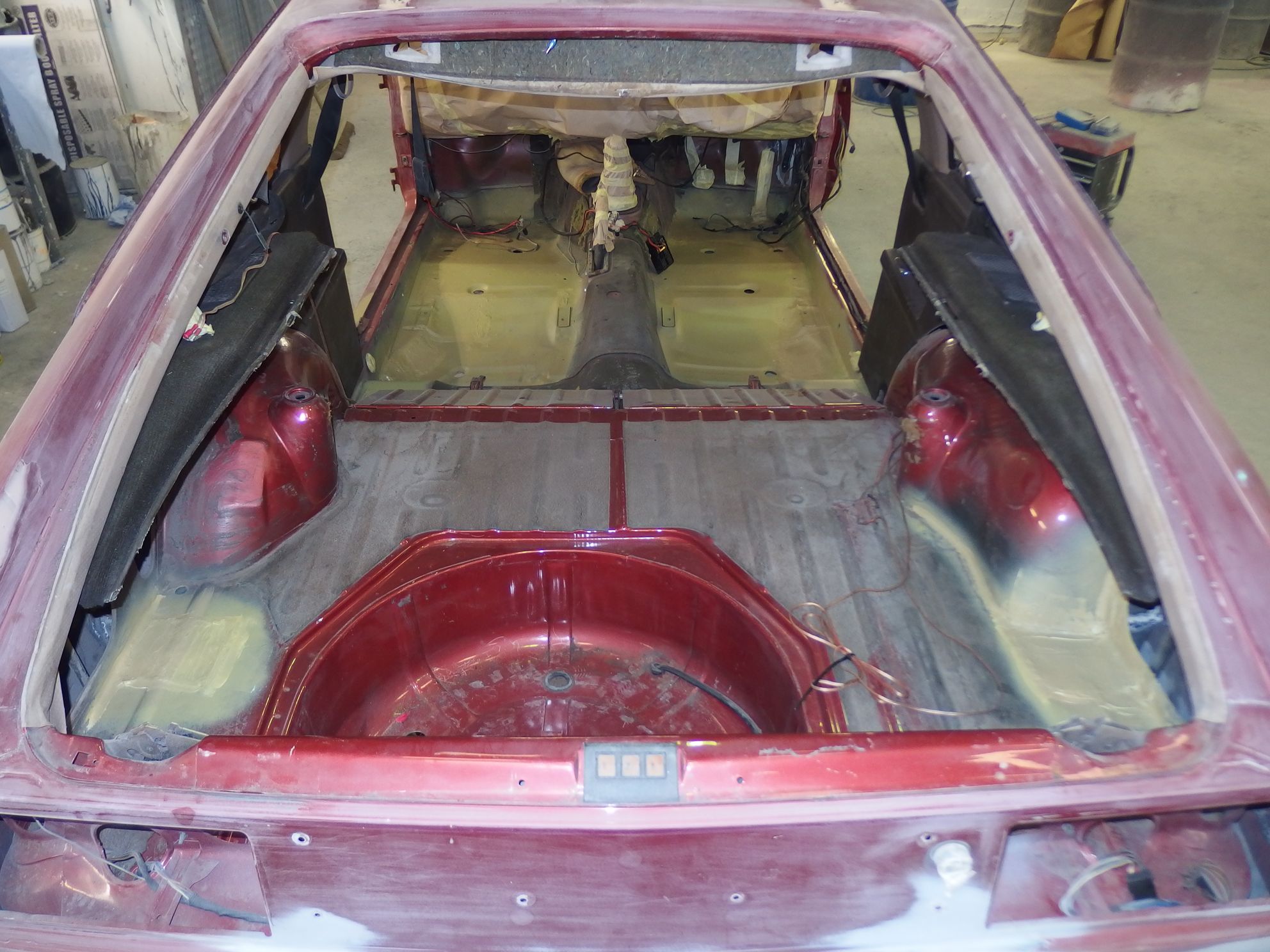
Now to the rear of the car, and more horrors lurking under the covers – literally. It appears that the chump who carried out some previous ‘repair’ work to the rear valance just left the rusty metal in place, welded some new stuff over the top and then plastered over the whole lot with a load of fibreglass and filler!
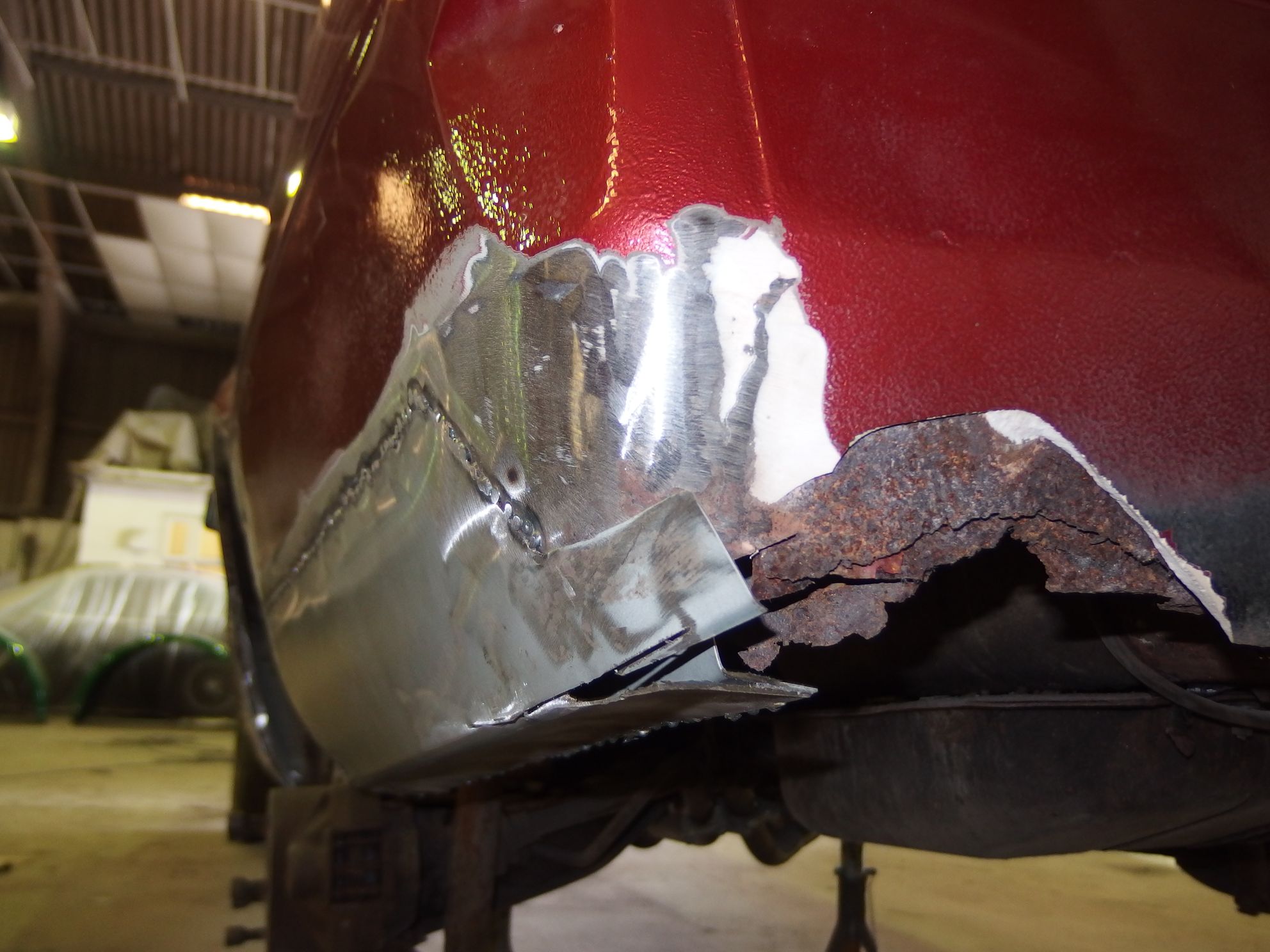
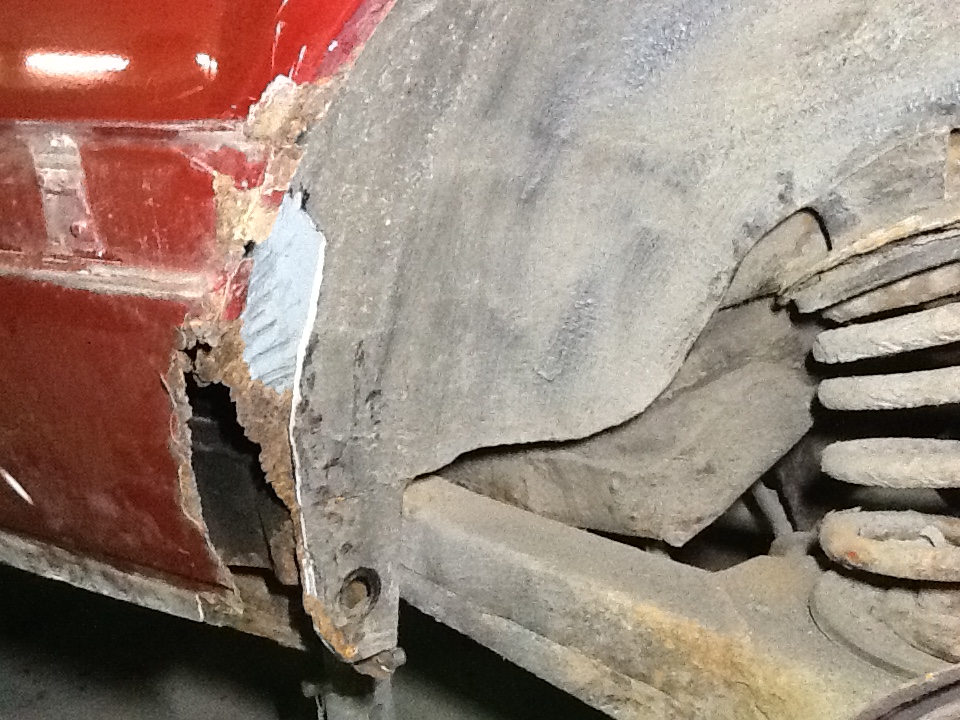
The rear wheel arches weren’t much better:
Paul has cut out the rusty bottom sections of the rear wings and wheel arches and welded in new hand-fabricated sections of galvanised sheet steel:
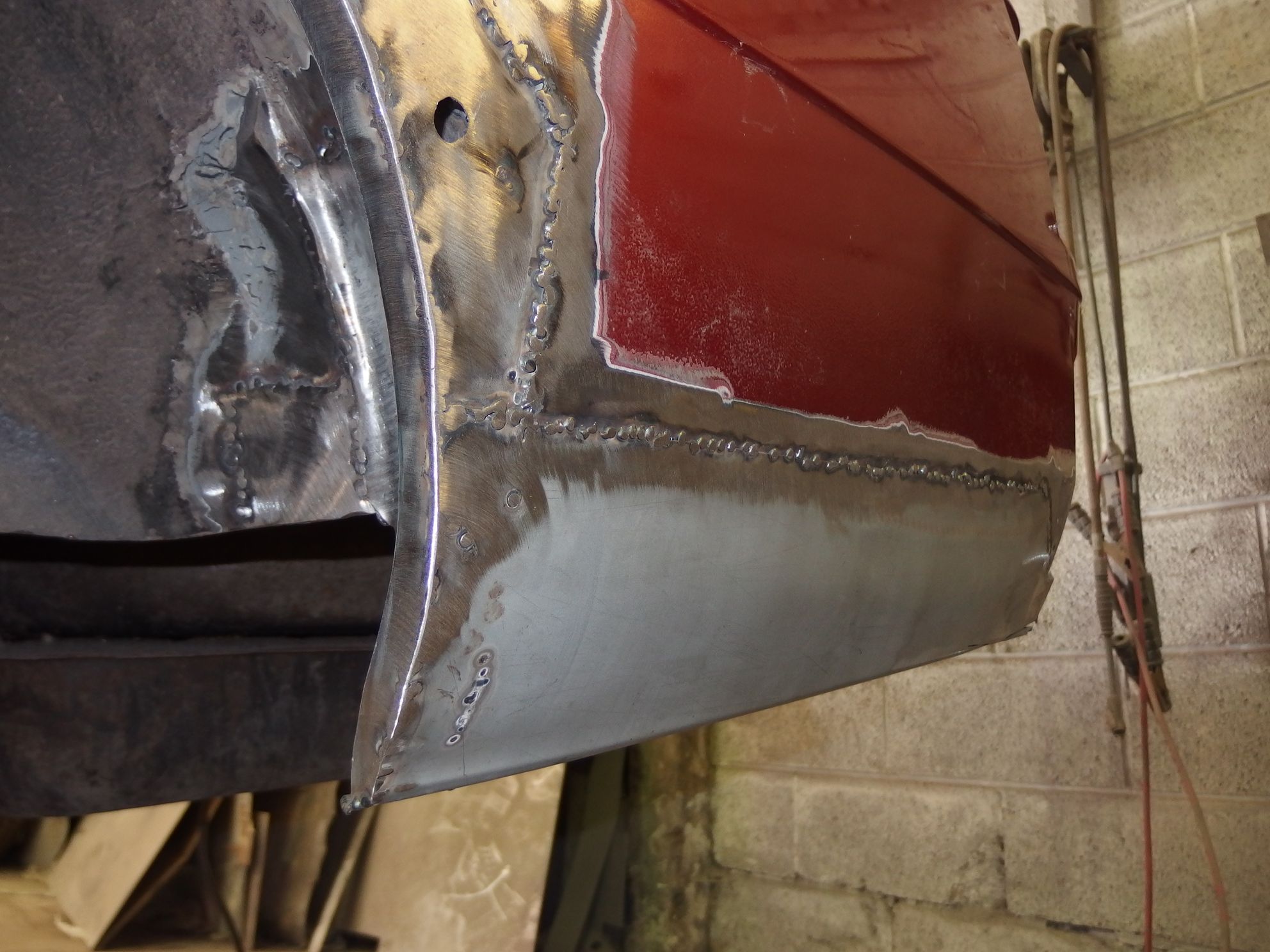
Paul says that this is the worst Monza he’s ever worked on rust-wise. I did notice that he’s got a few more grey hairs this time round compared to six months ago …
April 2018
The bodywork at the rear of the car is now completed. I managed to get a new section of rear valance from the Autobahnstormers and Paul has now welded this in to replace the fibreglass bodge that we saw last September:
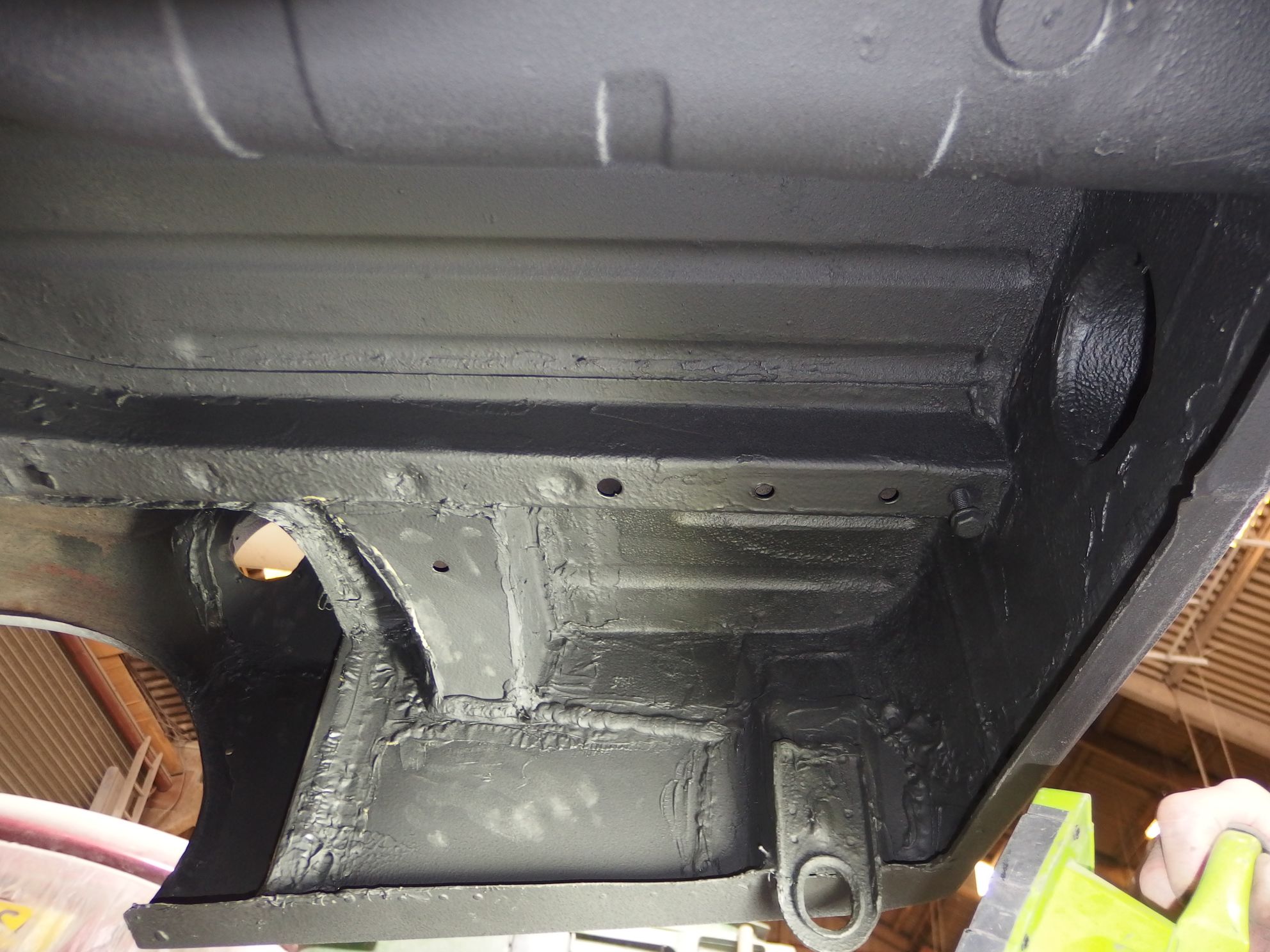
Now the underside of the rear, looking up towards the fuel filler inlet. Lots of anti-stonechip underseal stuff to protect everything:
Next job is to attend to the floorpan inside the car, as there are some fairly meaty holes there that wouldn’t look out of place in the Flintstones. Once that’s done we could be near to completion of the bodywork repairs. Then it will be the paint job, followed by putting everything back together and rectifying the various mechanical issues such as corroded fuel and brake lines etc. etc..
October 2018
More rot discovered unfortunately, this time with the rear suspension semi-trailing arms. For some reason the offside was in a far worse state than the nearside:
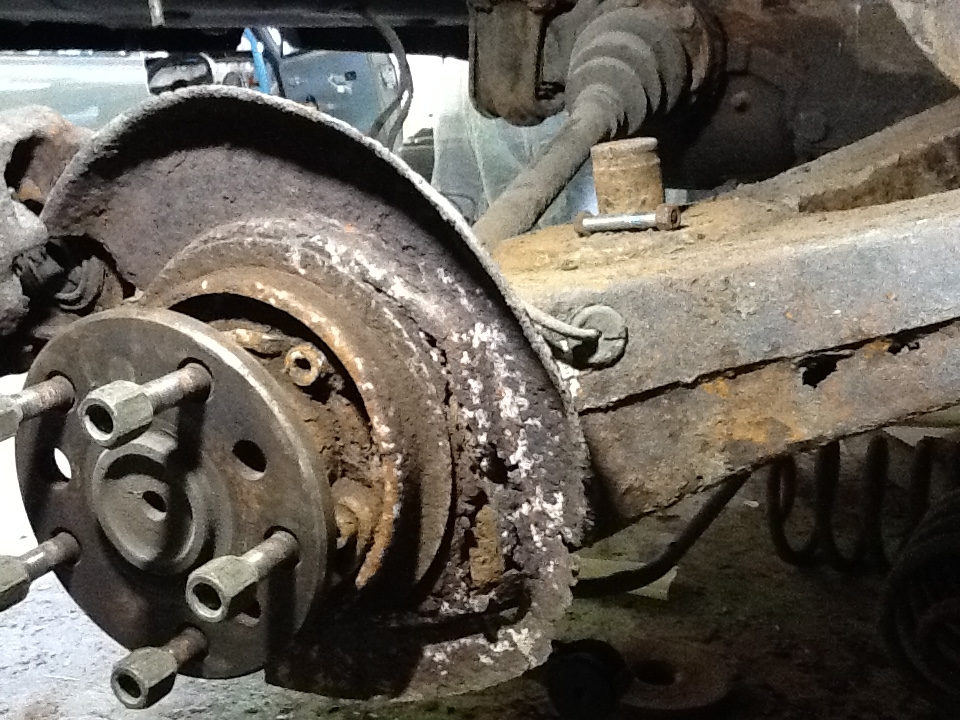
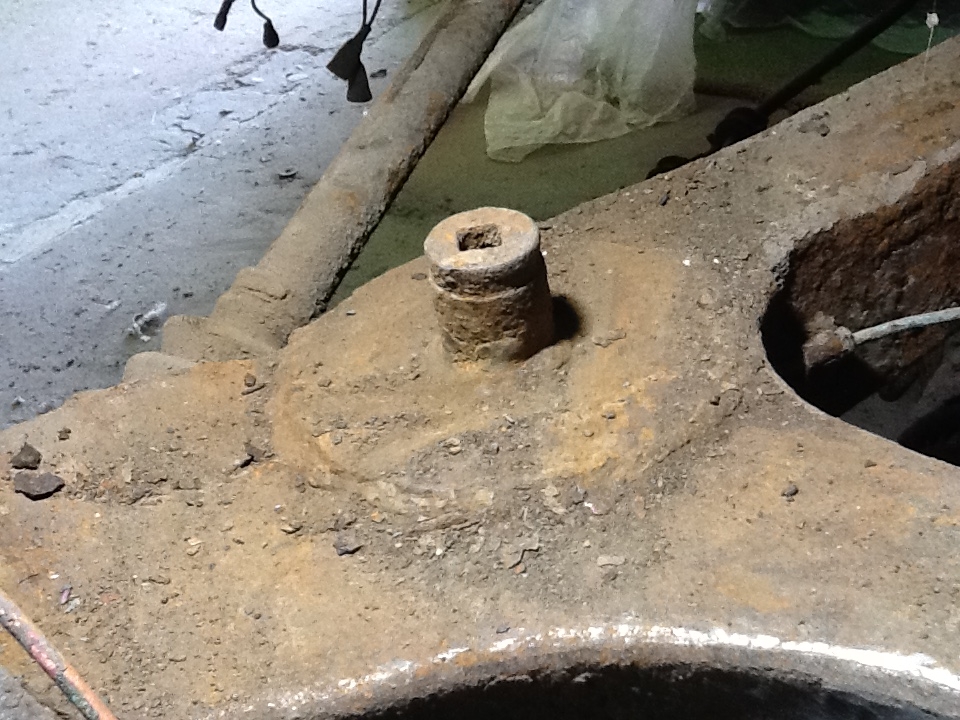
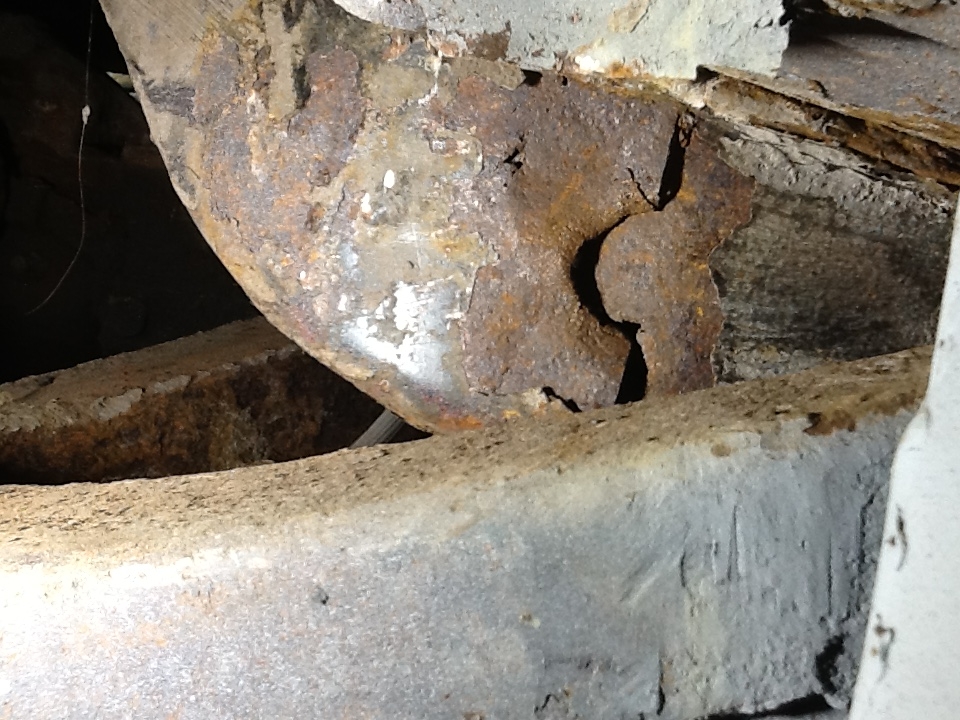
The brake disc backing plate had rotted through so much that there was nothing for the handbrake shoe retaining pins to grip on to. And yes you do see that correctly – somebody has welded a large half-inch-drive socket to the top of the arm to act as a spring seat!
With a great deal of effort and I suspect a lot of swearing (always helps in my experience) Paul and Andy have managed to get the hubs to bits, replace the knackered offside wheel bearing and repair the semi-trailing arms. New spring seats have been fabricated and welded on to the arms. Finally everything has been coated with more of that grey anti-stonechip underseal stuff (Gravitex I think) to hopefully keep out the tin worm in future:
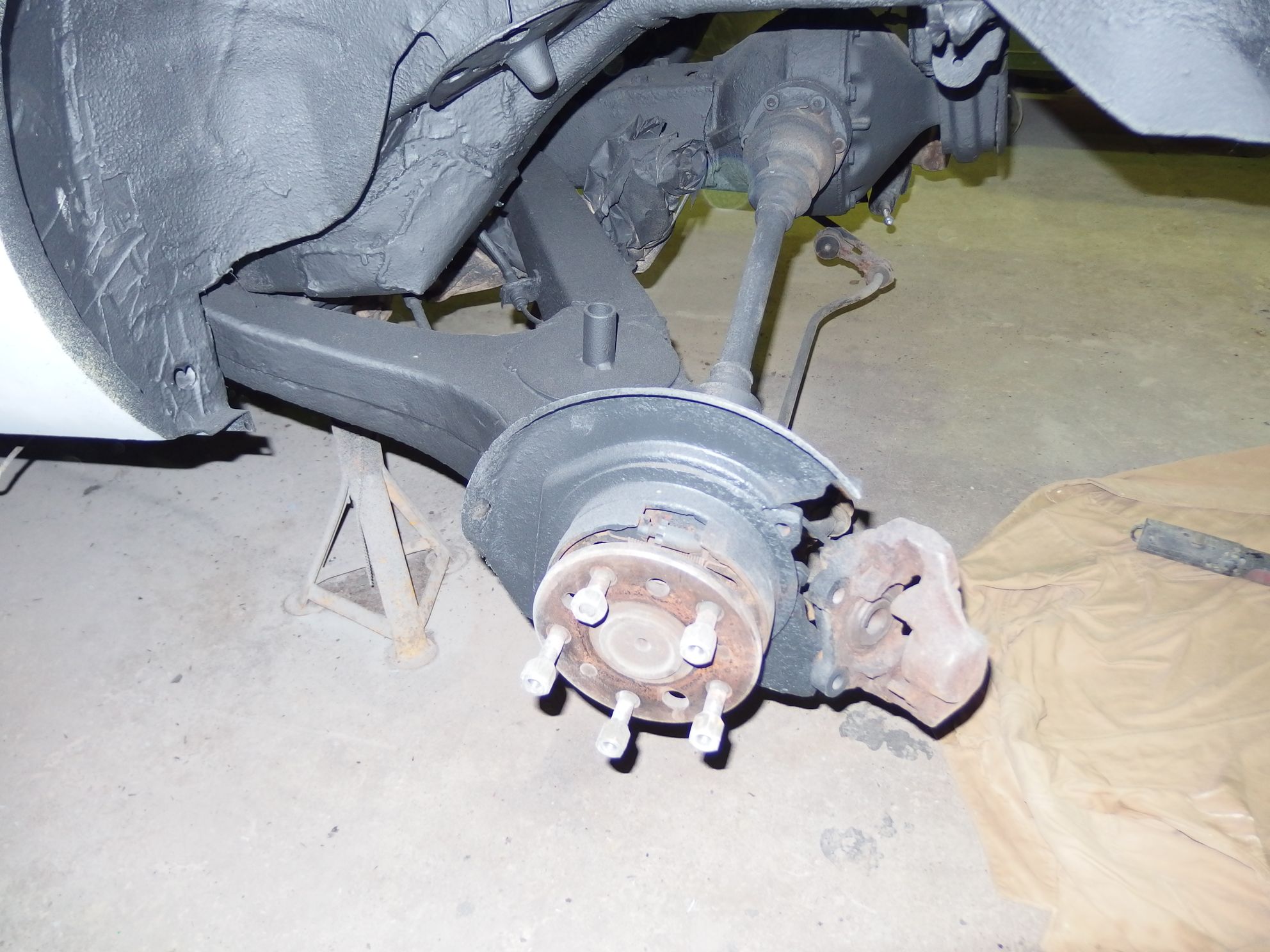
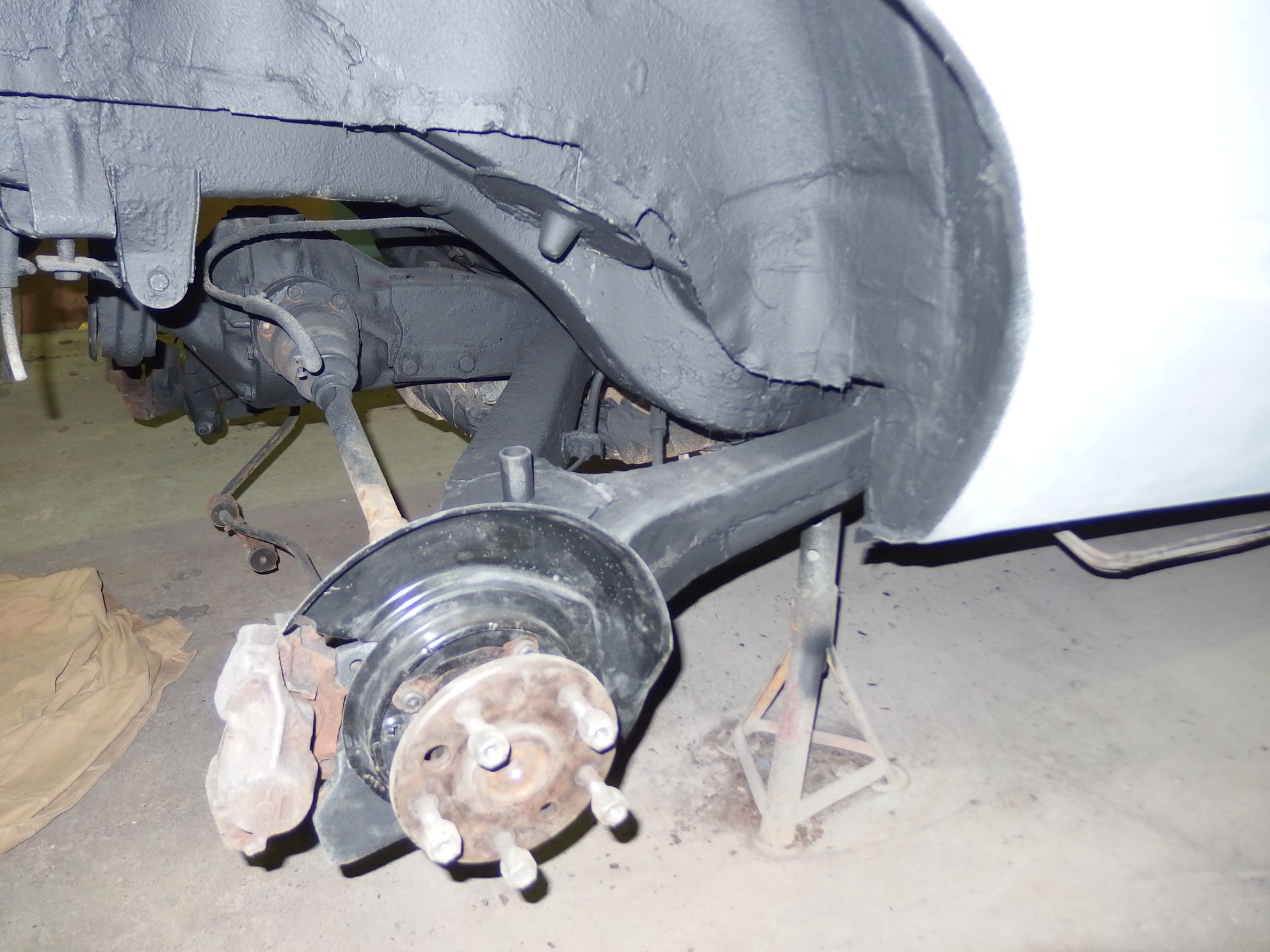
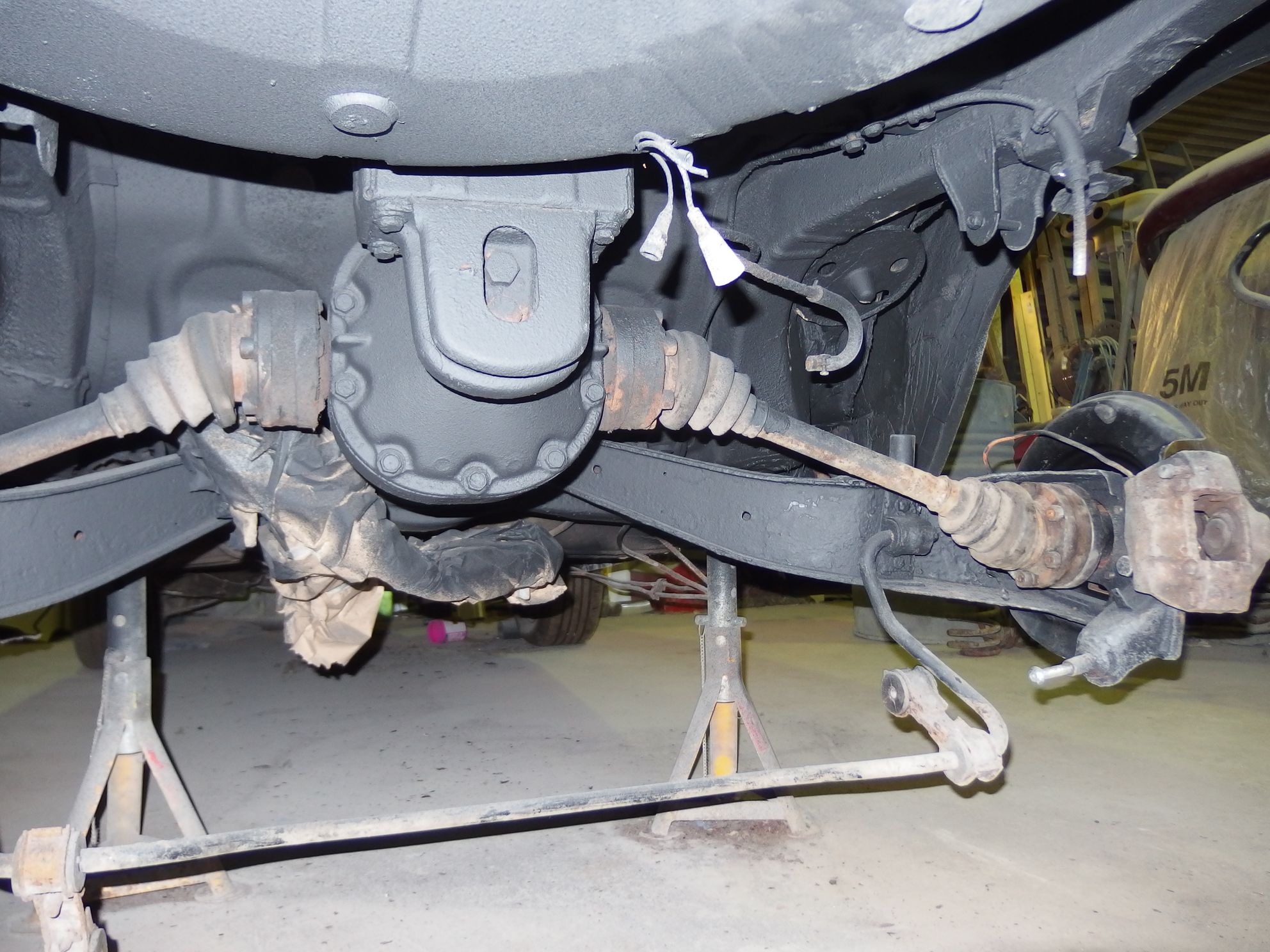
I managed to source a new offside disc backing plate from GM6 Spares in Cornwall, but the nearside one is not nearly so bad. It’s perforated in places but is repairable.
Still to do is to finish off the front of the car (i.e. putting the wings back on), the replacement of fuel and brake lines and the refurb of the brake callipers. And not forgetting the paint job of course. But so long as no other horrors are discovered I think we could be looking at next Spring for completion of the car.
February 2019
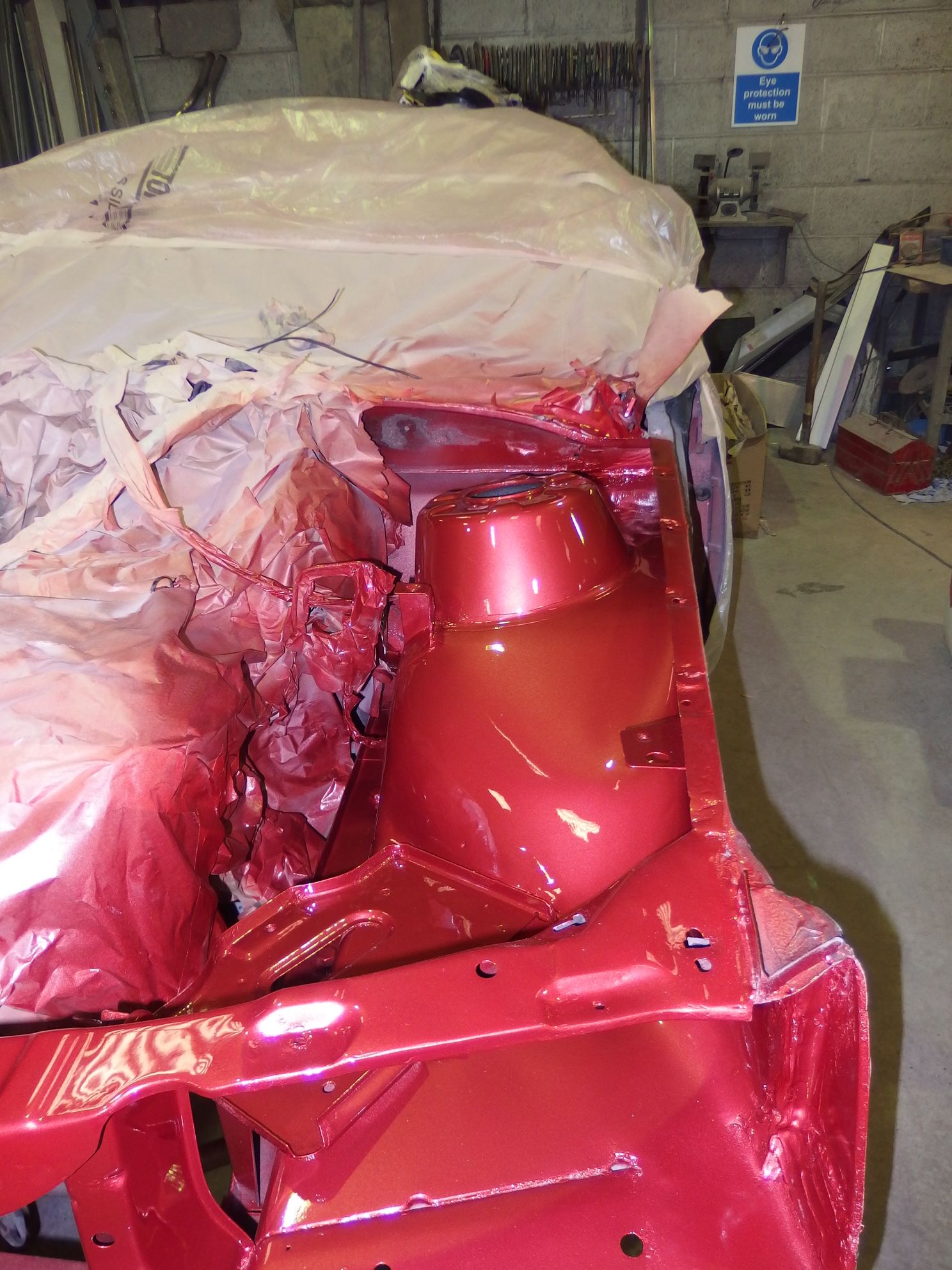
Not a big change from last time but a first taste of what the car will eventually look like when she gets her new paint all over. Under the bonnet now looks absolutely gorgeous!
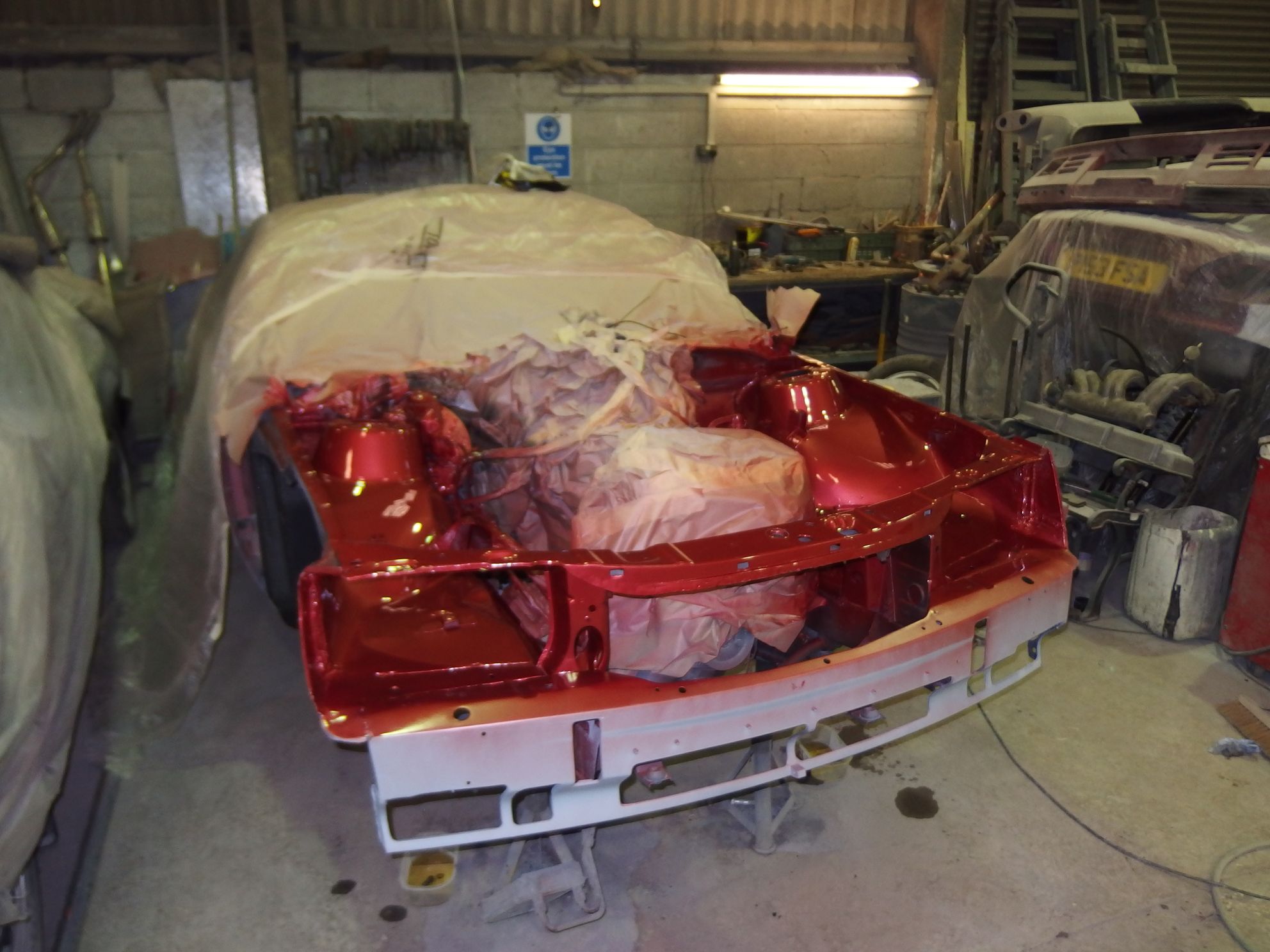
It’s hard to believe the transformation of that nearside suspension turret compared to a couple of years ago:
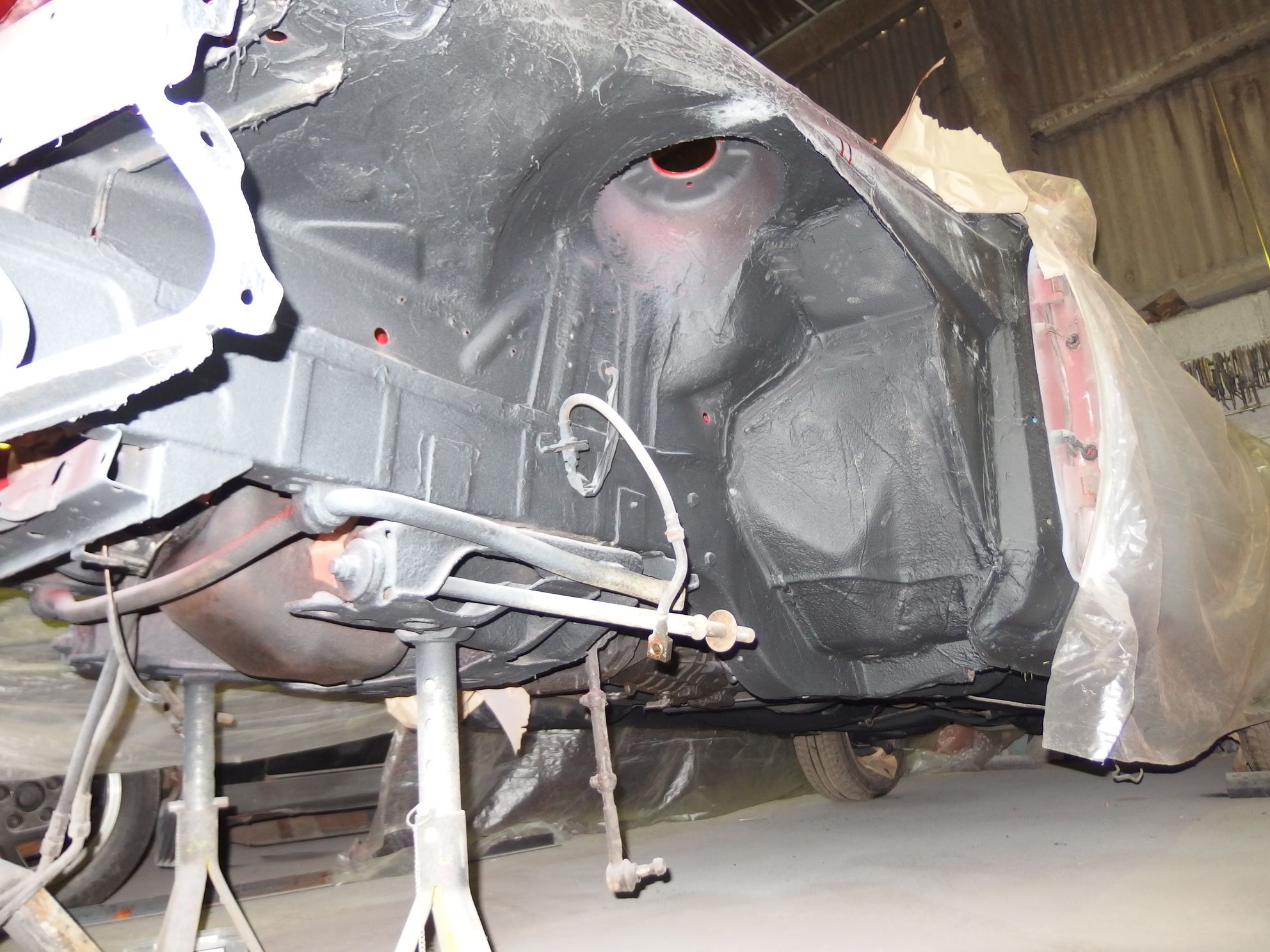
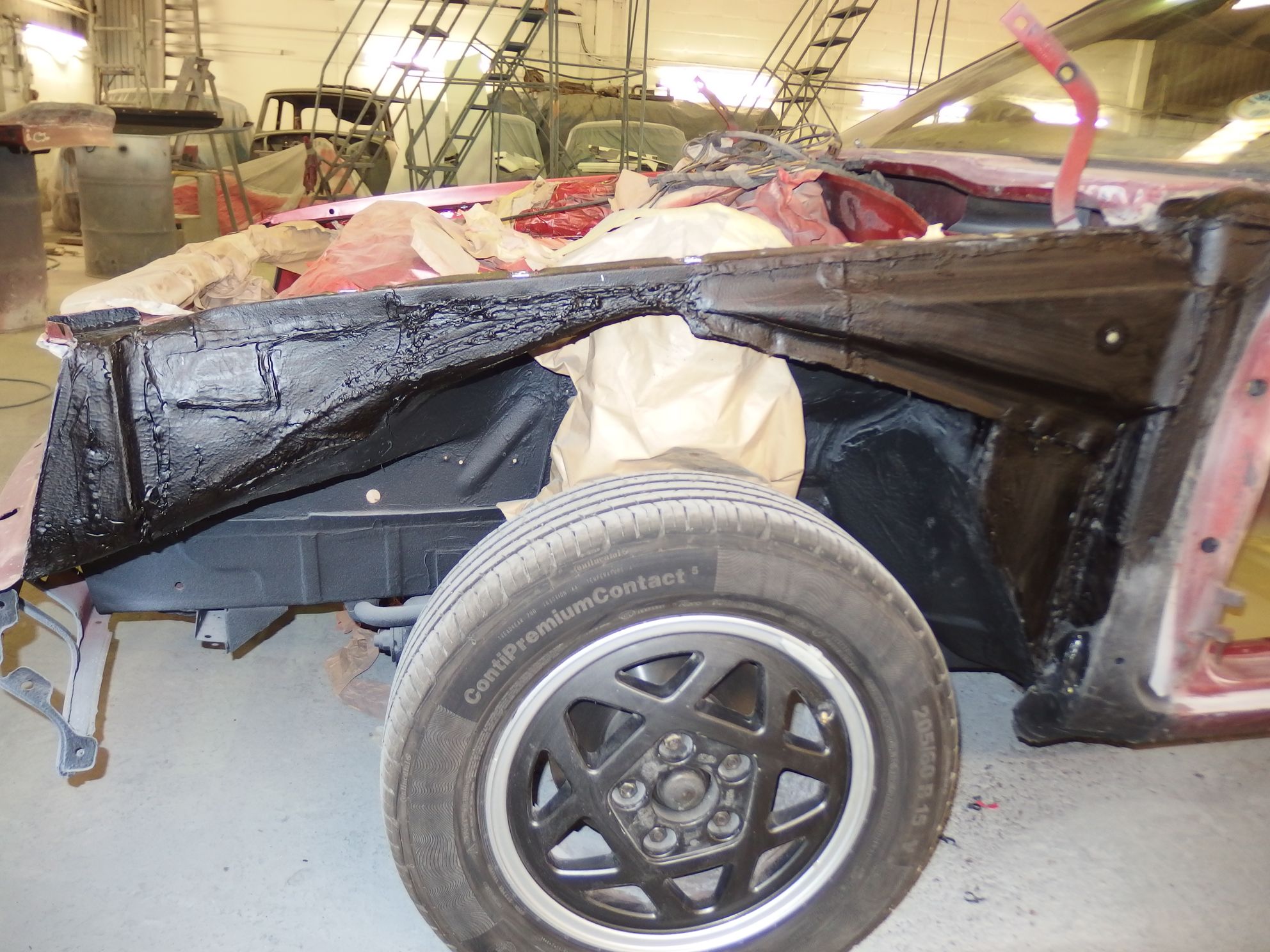
Underneath, both front wings have got plenty of anti-stonechip on them so that hopefully the car won’t be rusting again for a very long time:
June 2019
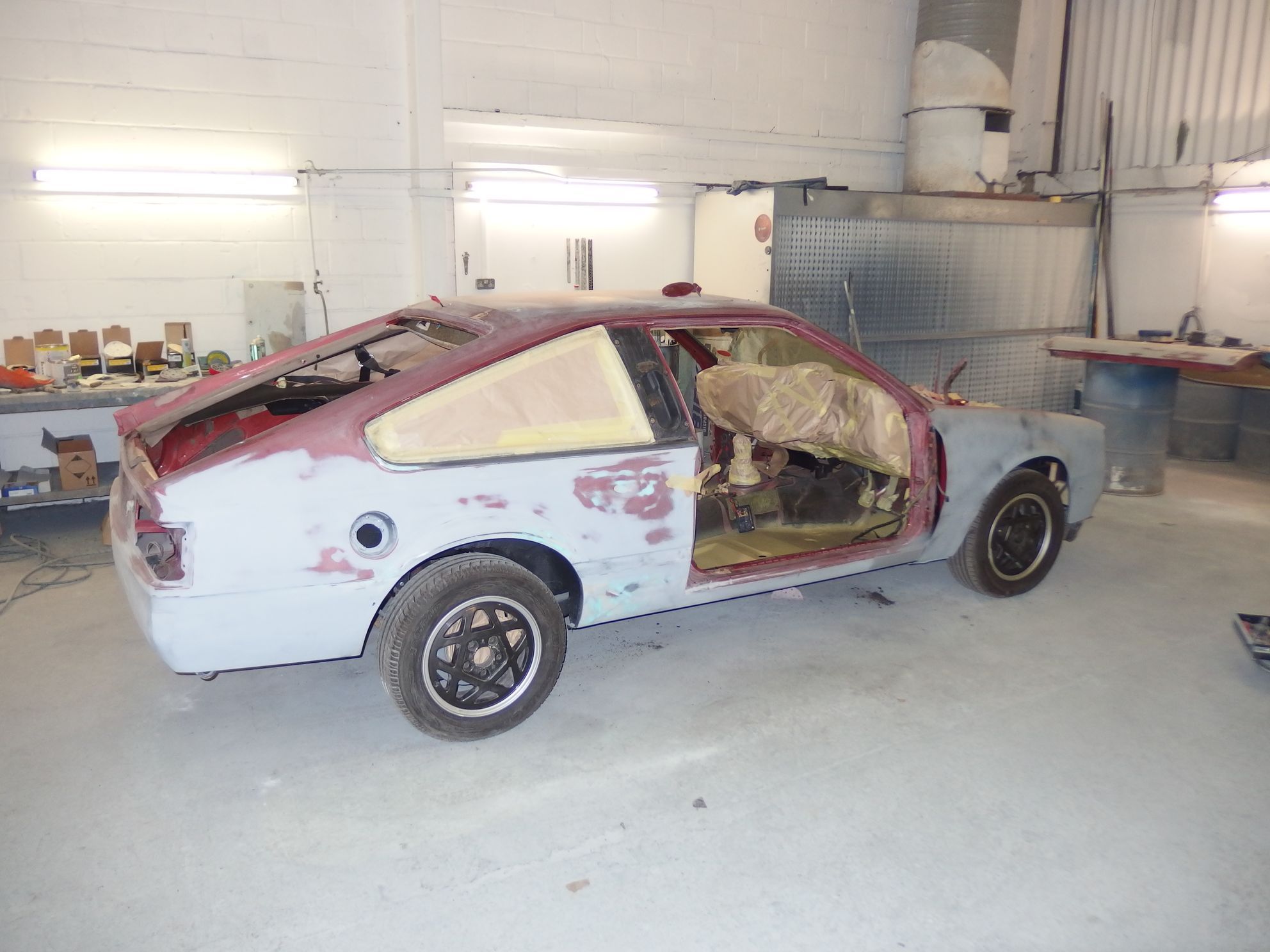
With her wheels back on at last the Monza is finally starting to look like a real car again. All bodywork repairs have now been completed bar a couple of rust patches around the windscreen, and the car is being prepped for her repaint:
Meanwhile, under the front wings there is a lovely top coat of Waxoyl:
Next task for me is to get the brake callipers refurbished, preferably with stainless steel pistons as Monza callipers are quite prone to sticking. This has proved to be a bit of a mission to organise but I’m hoping that Past Parts in Bury St. Edmunds will come up trumps this time.
July 2019
The refurbished callipers have come back from Past Parts:
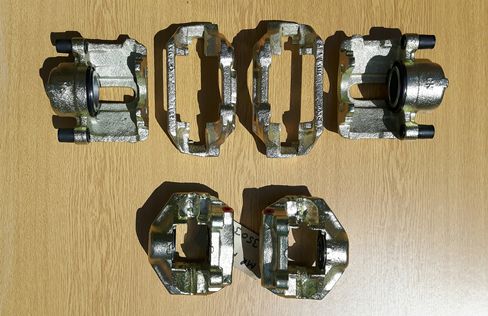
What a difference; they look almost like new. They’ve been zinc-electroplated and new pistons and seals etc. have been fitted. Unfortunately I wasn’t able to get stainless steel pistons made within a realistic time frame, but hopefully with regular brake fluid changes these chrome-plated ones will be OK. I’ve got the old pistons so I can always revisit this in the future if necessary.
August 2019
The car painted at last:
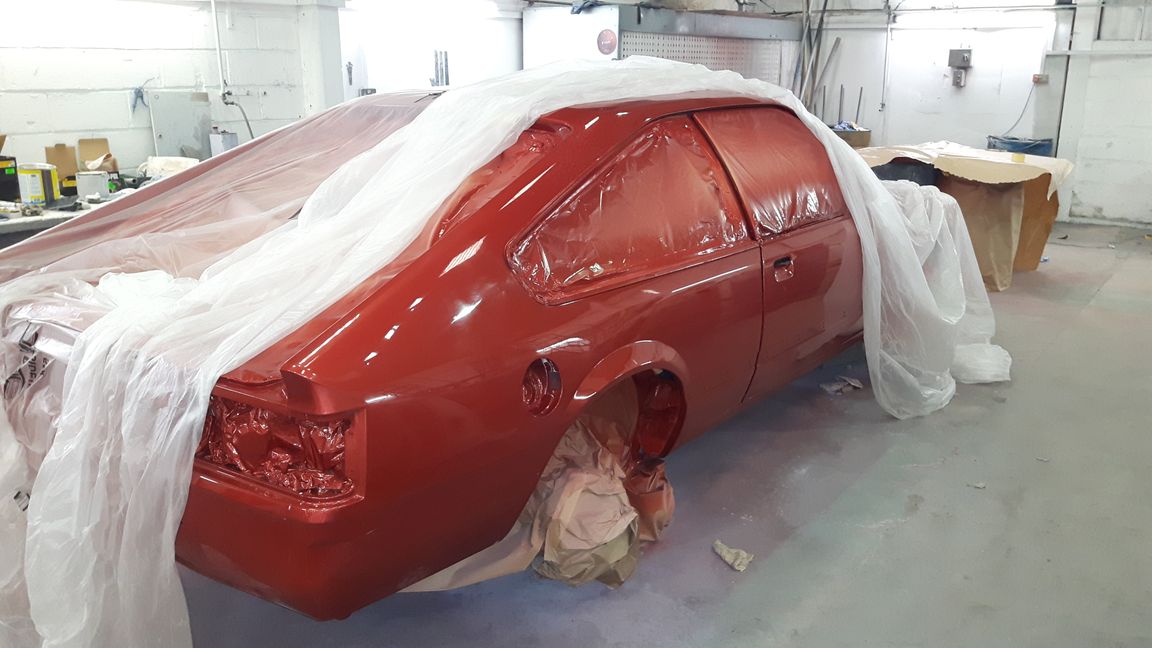
Now it’s time to reassemble all of the mechanicals!
January 2020
The paintwork all flatted and polished:
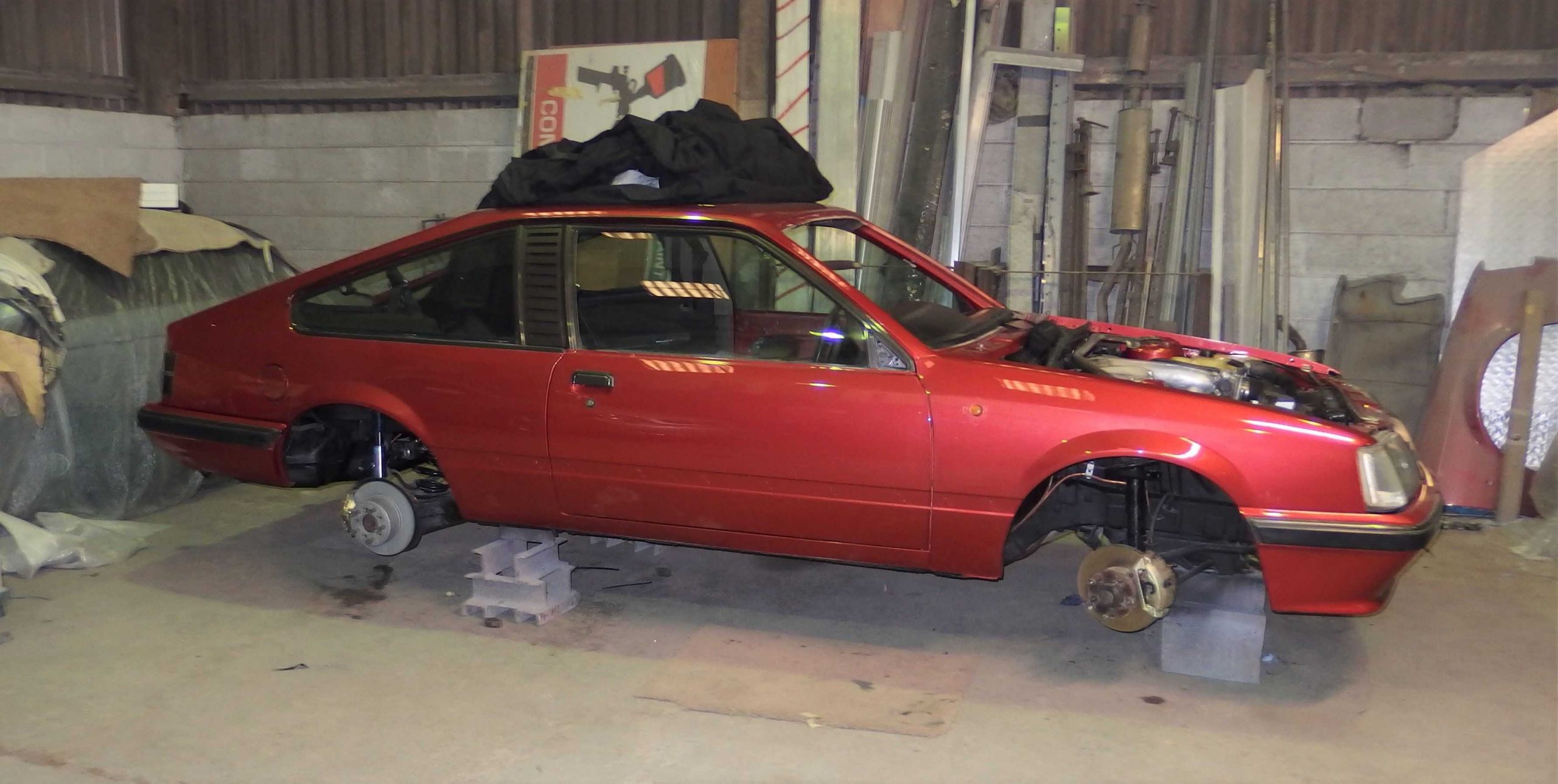
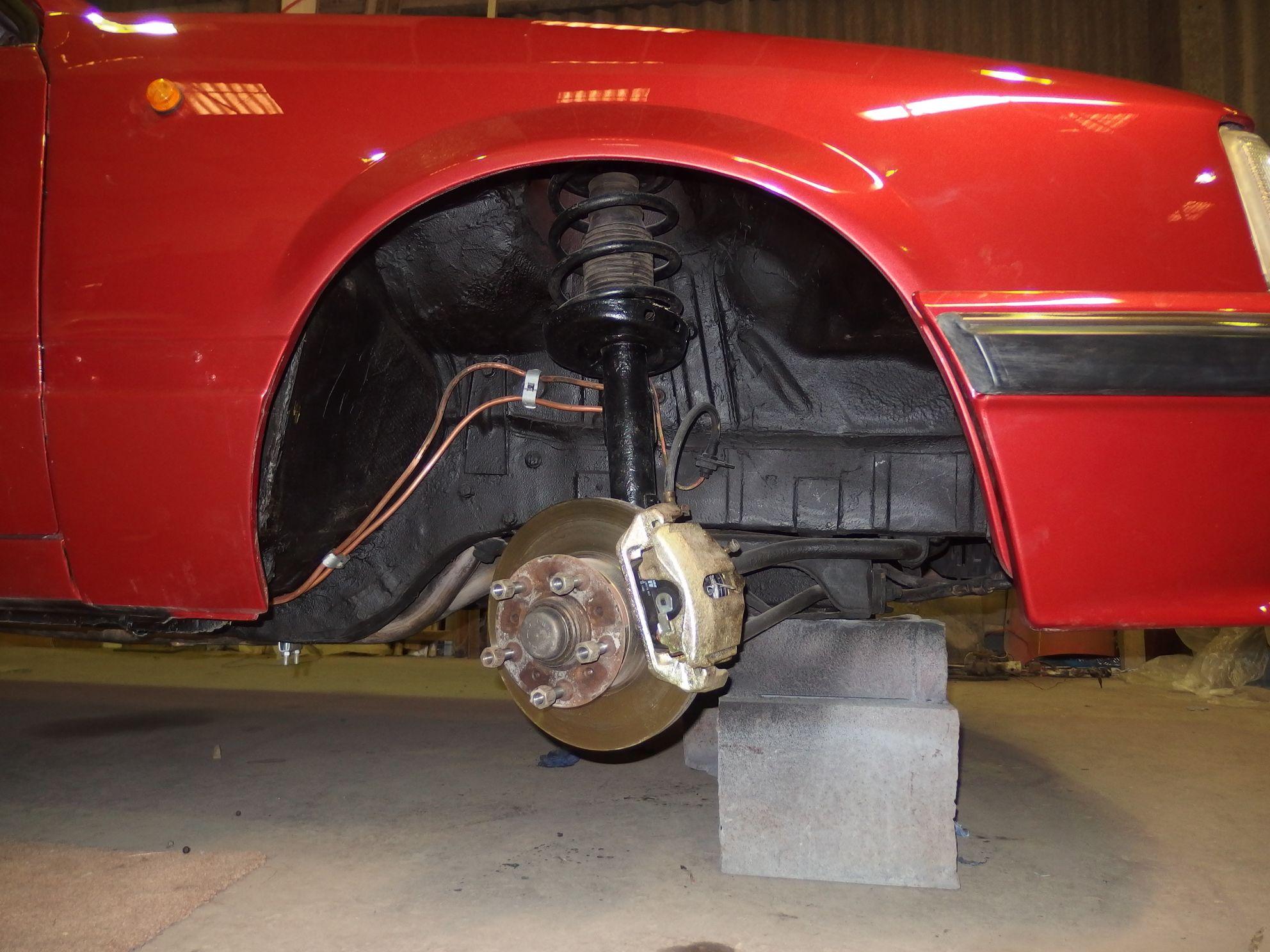
The major mechanical stuff such as new brake and fuel lines has been completed:
Under the bonnet Paul and Andy have done a fantastic job cleaning everything up and replacing bits where appropriate:
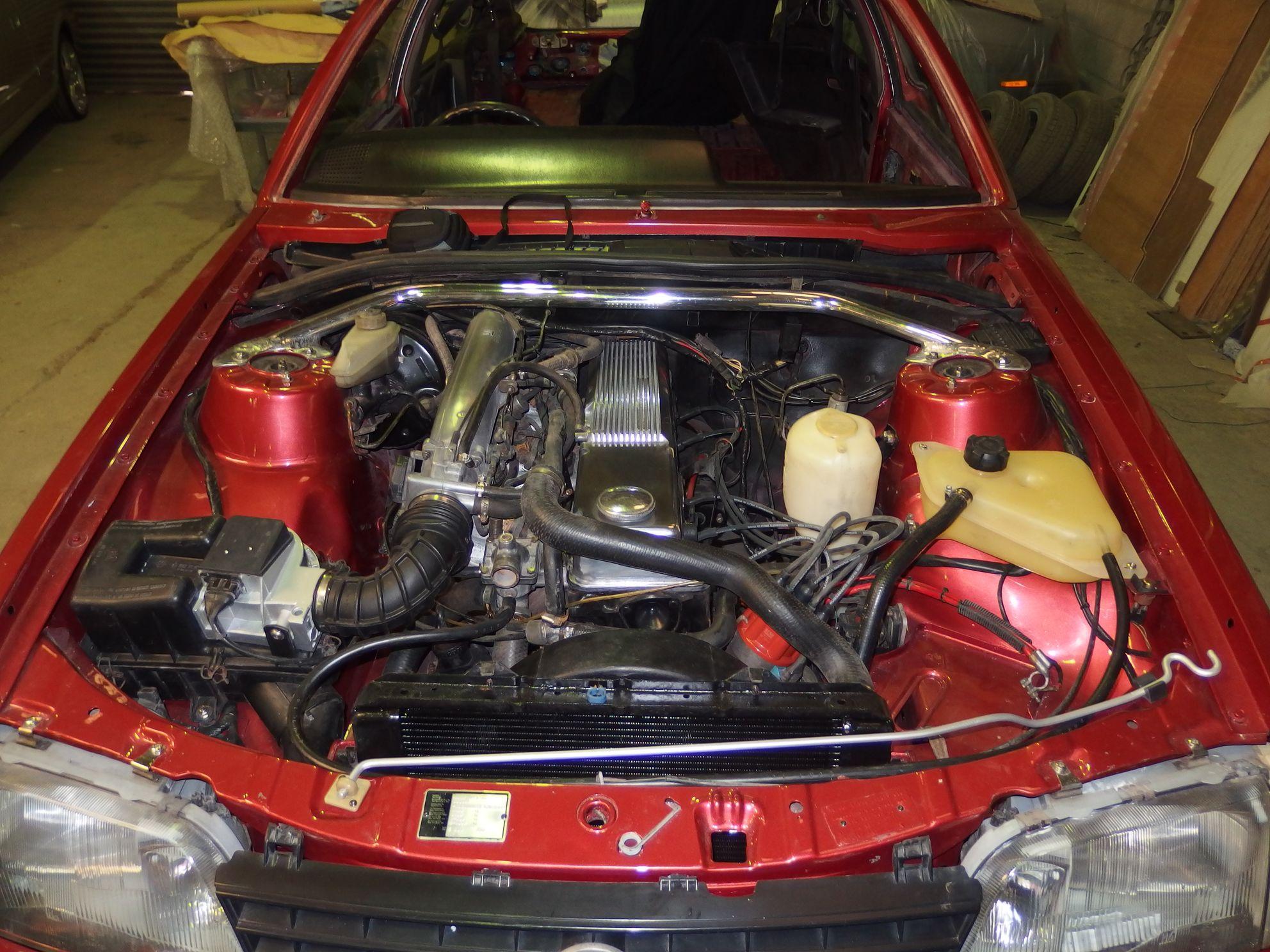
The rocker cover took three hours to polish up apparently. I certainly won’t be feeling any way embarrassed when I take the car to shows!
Finally a view of the front of the car, complete with cleaned-up headlamps:
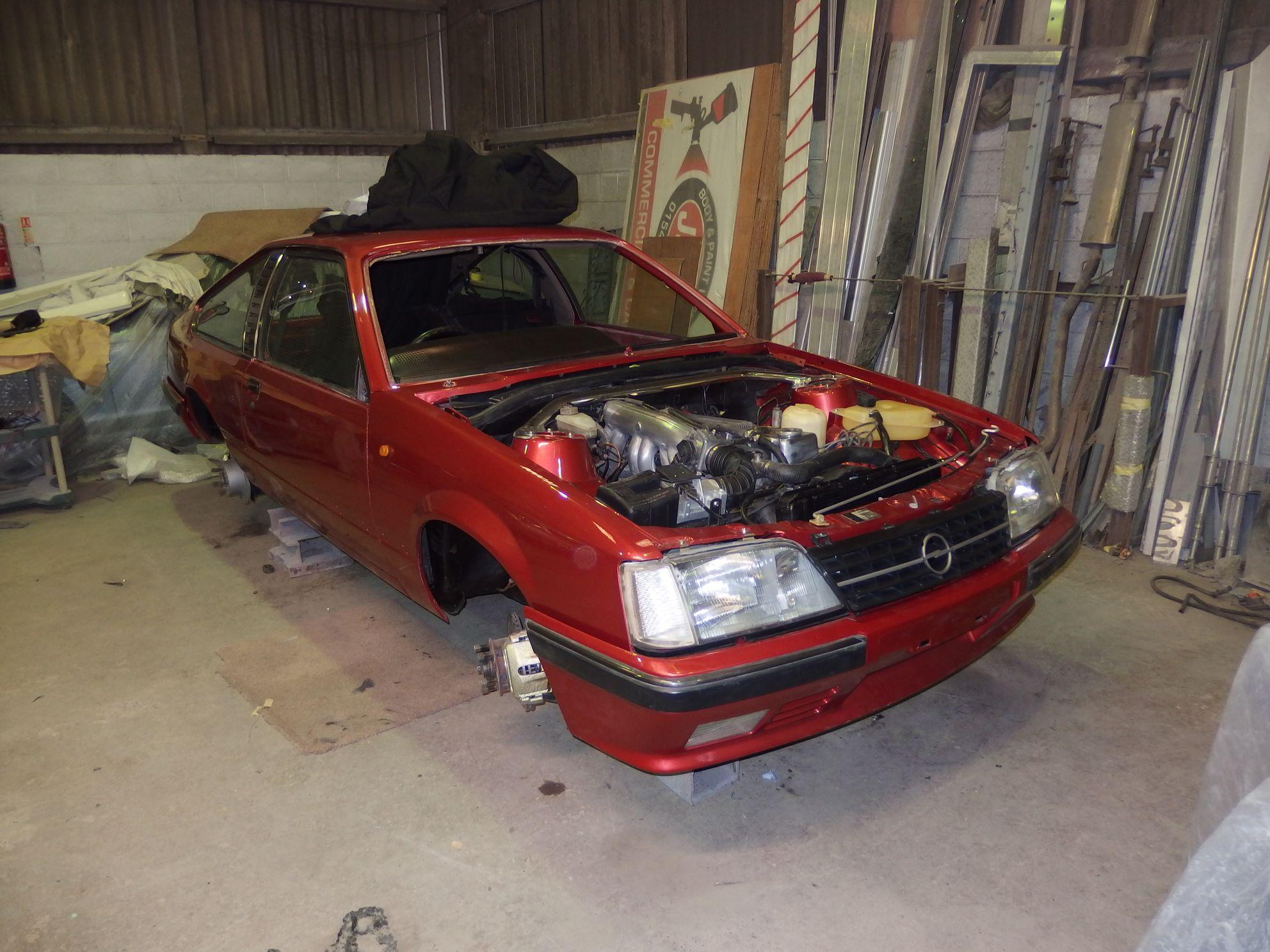
I umm-ed and aah-ed for a while regarding the headlamp wipers and whether I should get them put back on or not. Part of me said ‘yes’ for originality but the more pragmatic side said ‘no’. The wiper motors were always going wrong as I remember from my previous Monza and here in the UK the weather isn’t really bad enough to need headlamp cleaning, especially in the south of England where I live. My 2002 Mondeo Ghia X doesn’t have any headlamp wash/wipe system and actually I think the Monza looks better without the wipers so they are staying off!
There are one or two jobs remaining to be done, such as installing Silent Coat sound deadening in the cabin, but at the moment the expected completion for the old girl is March – not long to go now!
24th June 2020
Collection day – the end of the restoration story, from the bodywork side anyway. The car has been ready for a few weeks but because of the COVID-19 pandemic I haven’t been able to get her until now:
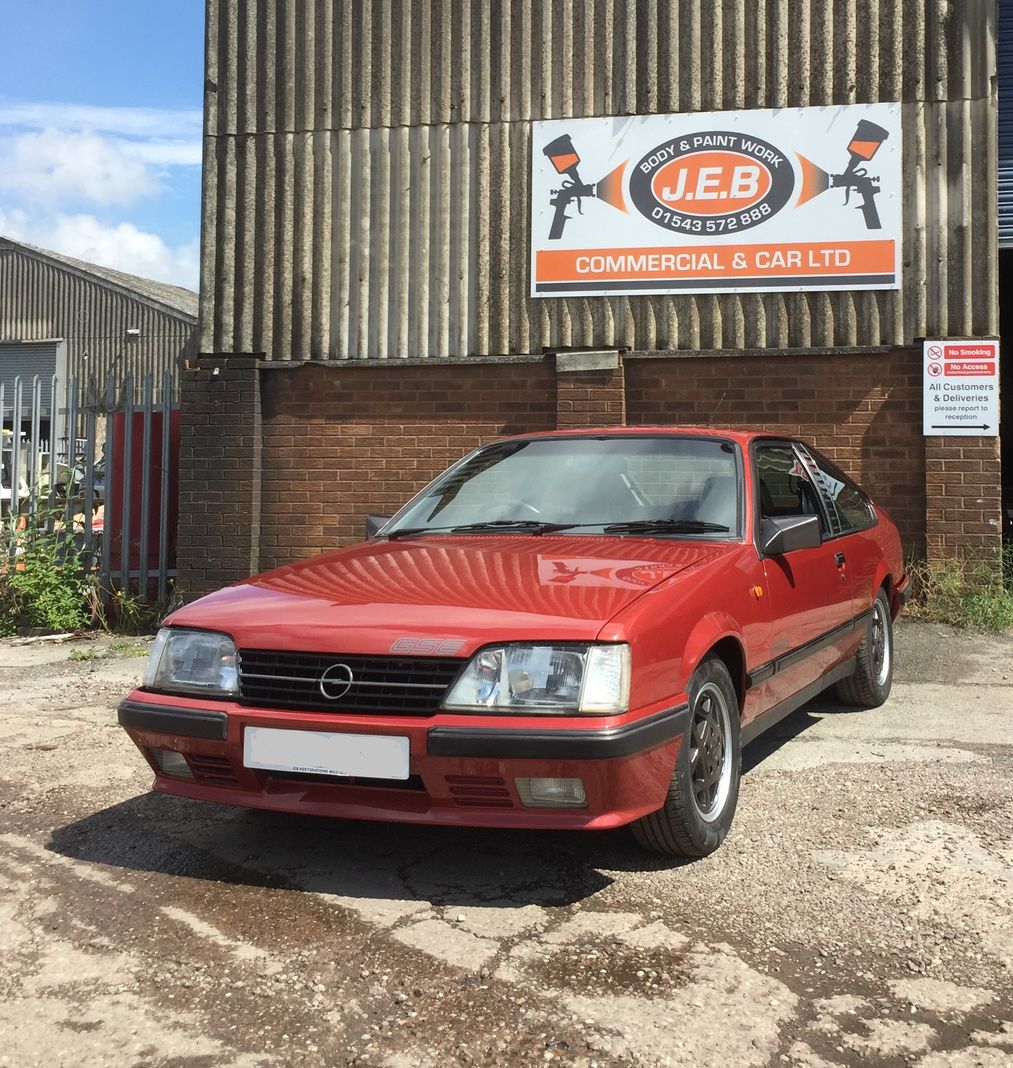
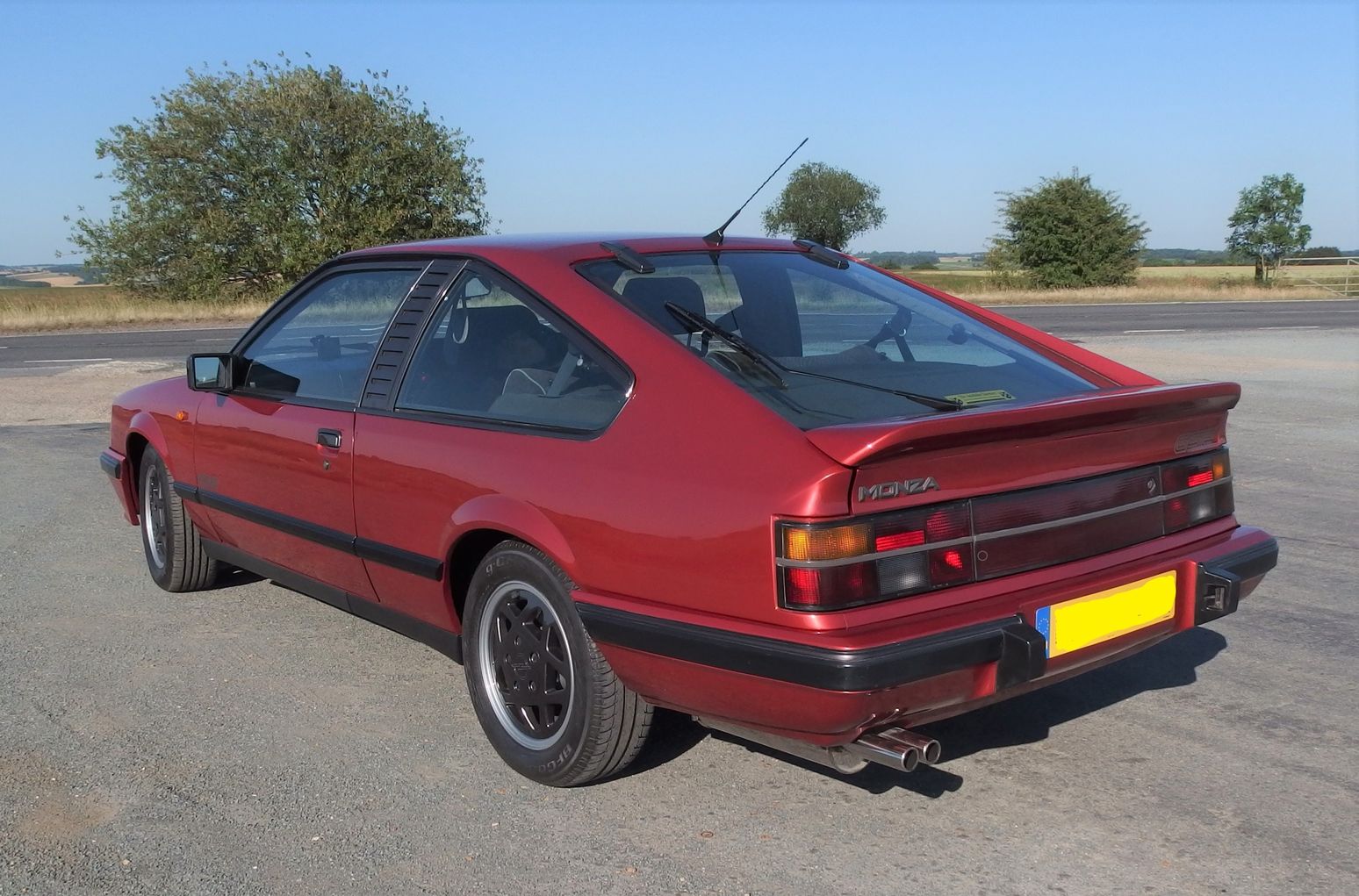
The car looks great. Paul and Andy have done a fantastic job in bringing this piece of Eighties history back from the brink and giving her a new lease of life.
February 2024
I’ve always had a hankering to put the later Senator B C30SE 24-valve engine in the car ever since I first bought it but I kept telling myself it was a silly idea; I should go for the simpler upgrade by putting in the 12-valve C30NE engine with the big-valve-head etc. etc.. But when one of my Autobahnstormers club mates said he was getting the 24-valve conversion done on his Monza that was the catalyst. The heart has overruled the head and I’ve decided to do the same. A conversation with my mate’s mechanic Adrian at AC Autowerks in Bridgend confirmed that he’s prepared to repeat the conversion on my car, so the project commences! By chance Paul at JEB has a spare engine lying about so we’ve agreed a price for that and the ancillary parts, and Toovey Race Engines round the corner in Cannock have agreed to strip and rebuild the engine:
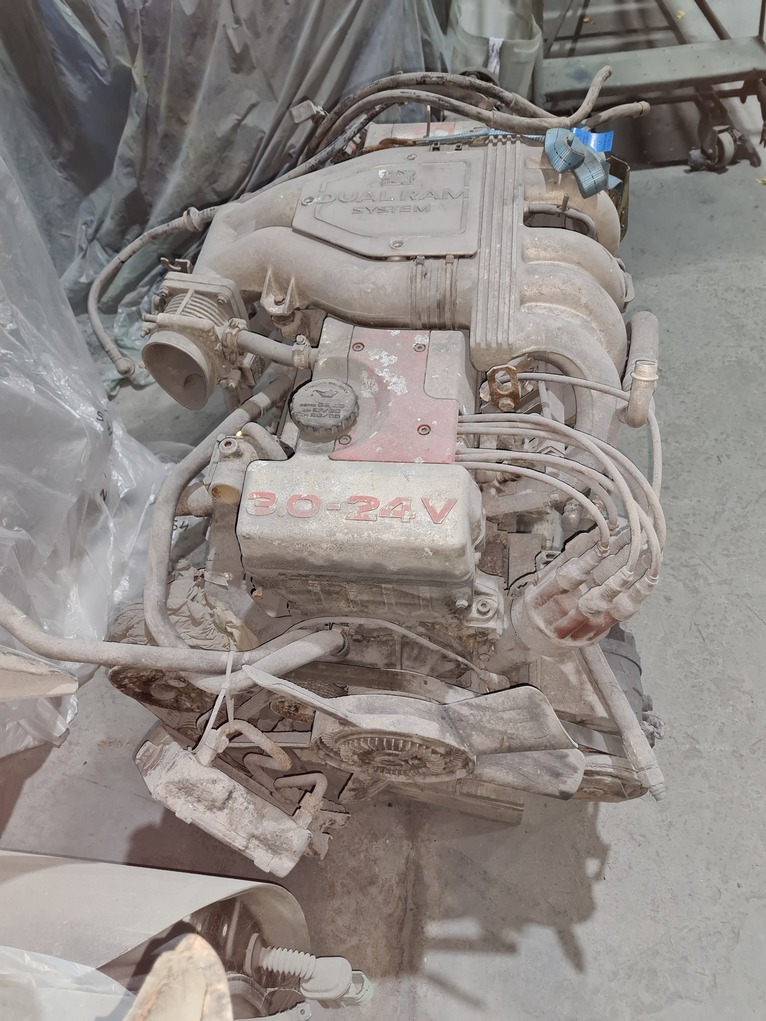
Projected start date is around July – exciting times!
July 2024
The engine rebuild will be delayed a bit as Toovey Race Engines has a lot of work on at the moment. However it seems like a good time to order the overhaul kits and associated parts for the C30SE engine from Thomas at the excellent Edelschmiede in Germany. I want to replace everything with new components where possible, especially the problematic timing chains.
October 2024
Work has now started on the engine rebuild. Mike at Toovey’s says that the engine is not in a great state but is recoverable with a rebore and head & block skim etc.. The plan is to take the car down to AC Autowerks round about mid-November for the conversion to start.
November 2024
Nothing ever quite goes to plan. There is a twelve-week lead time for my new Wiseco forged pistons from the US, so it looks like the engine won’t be finished until January. Not ideal but at least the guys at Toovey’s can be cracking on with other bits while they’re waiting for the pistons to land.
January 2025
The pistons have finally arrived and been installed and the rebuild is complete:
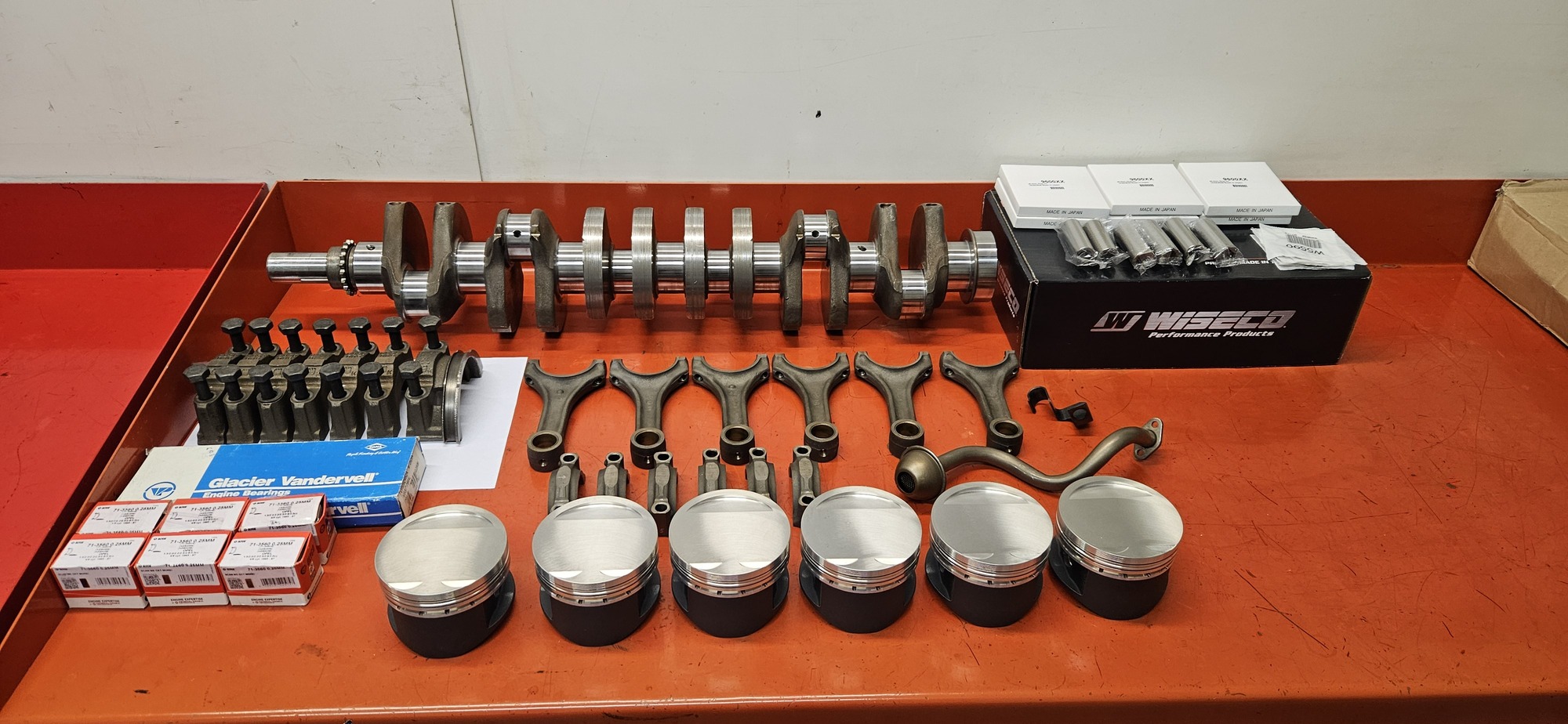
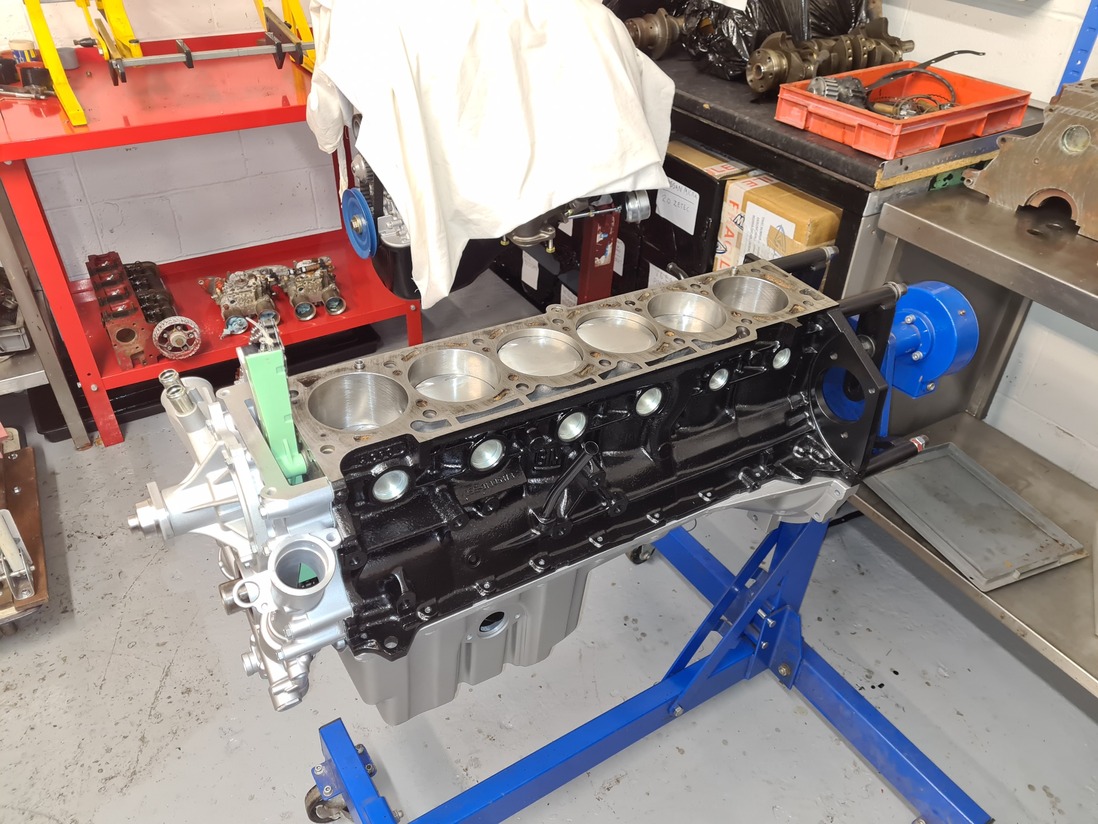
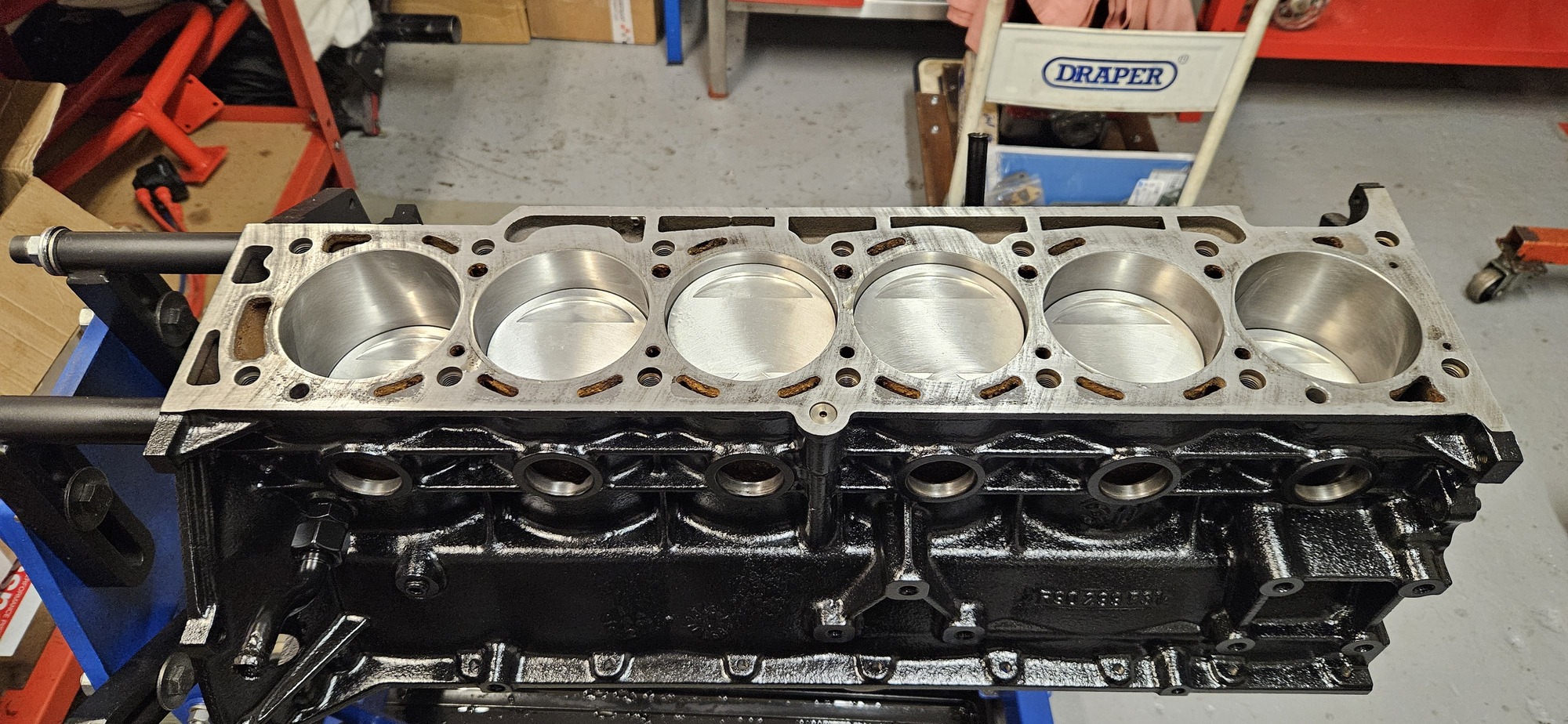
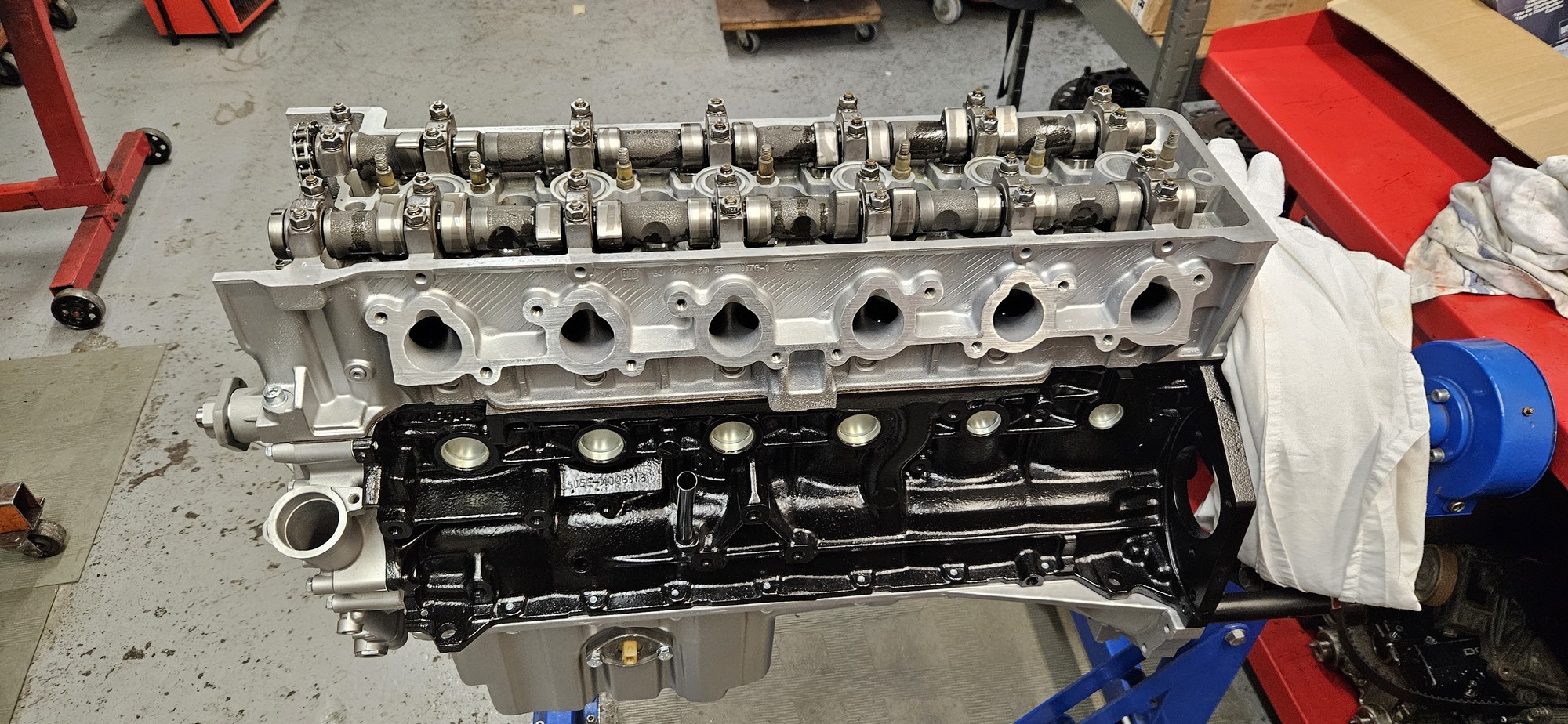
What a thing of beauty that is, and I do like a tidy workshop as well! Toovey Race Engines has done a sterling job of rebuilding the engine and making it look almost like new. The car has now been delivered to Adrian in Bridgend for him to come up and collect the engine, work his magic and carry out the conversion.
However it hasn’t taken long for the first problem to rear its ugly head. The custom flywheel that I had bought a few months ago in readiness for the conversion doesn’t fit – it’s too big. I’m keeping the standard clutch and Getrag 265 gearbox but the C30SE engine uses an eight-bolt flywheel rather than the 12-valve engine’s six-bolt one. I can feel a bit of Googling coming on …
April 2025
After spending many hours of slaving over a hot keyboard and talking to quite a few people we think that the flywheel I have is probably for replacing a manual 24V Carlton GSi’s dual-mass flywheel with a single mass one. So completely wrong. Fortunately during my internet searching I came across TTV Industrial, which makes custom flywheels and various other associated components. A flywheel for mating the C30SE engine to the Getrag 265 gearbox is one of their listed products so an order was placed and the new flywheel arrived a couple of weeks later. There was a minor hiccup in that it had accidentally been drilled with six holes instead of four, but TTV very kindly redrilled it and at last the flywheel & clutch saga is over.
July 2025
The mysterious case of the exploding oil filters
It was all going swimmingly; some minor chassis repair work has been done and the engine, gearbox and wiring loom is now installed in the car. The engine had previously been turned over without the plugs in to make sure that all the bearings were lubricated. Now it was time for fire her up for the first time. Adrian turned the key. She starts! Success! Then there was a bang and Adrian felt a wetness in his trousers …
Now I know what you’re thinking but in fact the oil filter had bulged and split, spurting oil all over the garage floor … and Adrian’s trousers:
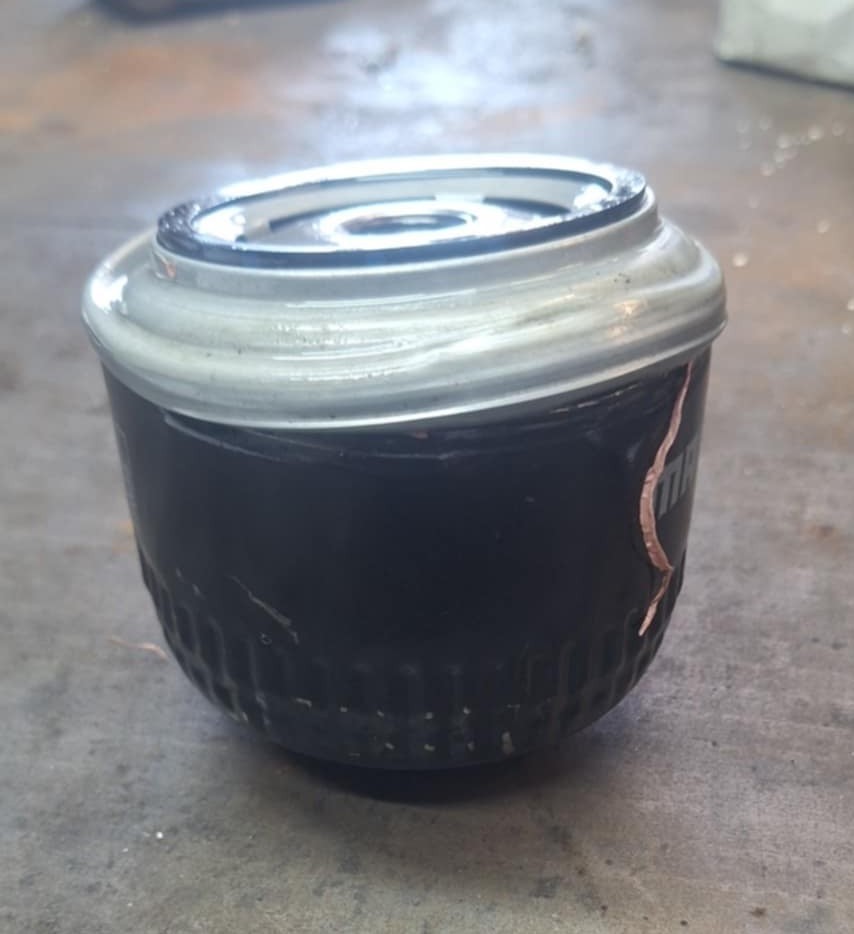
The engine was turned off in an instant and more head scratching followed. I’ve never heard of this happening before but Googling this issue does show up quite a few hits, all pointing to a stuck oil pressure relief valve. The valve was removed and sent back to Toovey’s for investigation. They found that a small piece of timing chain-guide plastic moulding flash had got into the relief valve piston and probably jammed it. The cleaned-out valve was sent back and refitted and we expected that everything would now be fine. Sadly our hopes were dashed – exactly the same issue. Yet more head scratching. I really hope this isn’t being caused by some blockage inside the engine that means the whole engine has to come out and be dismantled again. What we haven’t tried is replacing the oil pressure relief valve, so obtaining another one is the logical next step.
August 2025
I’ve managed to find another oil pressure relief valve from an Autobahnstormers club member and this was packaged up and sent off to Adrian along with some missing power-steering parts. When Adrian received the relief valve and compared it with the original it was quite obvious what the issue was – the piston had been inserted the wrong way round! Mike at Toovey’s assured me that he photographed everything as he dismantled the engine, so I think the fickle finger of suspicion points to something done when the engine was installed in its donor vehicle. We will never know for sure. The main thing is that fitting the replacement valve solved the problem; the engine now starts with good oil pressure – and no more wet trousers!
This has been such a relief if you’ll pardon the pun. I’m so glad that the engine runs without anything exploding!
September 2025
Although the engine runs the engine management light comes on and won’t go off. Flashing the fault code shows ‘Air-flow meter low voltage’, and once again copious Google searching reveals a possible fix. New AFMs are rarer than hens’ teeth but these contraptions are basically just a mechanical flap that’s hooked up to a potentiometer. With use the carbon track of the potentiometer gets worn and eventually starts to give false readings to the engine management ECU. The solution is to carefully bend the potentiometer wiper arm so that it contacts a different, unworn, part of the track. Adrian has done this and success – the EML has gone out.
November 2025
The car is finally home after its extended sojourn in South Wales. Adrian at AC Autowerks has done a very tidy job with the conversion; several people have commented that the engine looks like it’s always been in there:
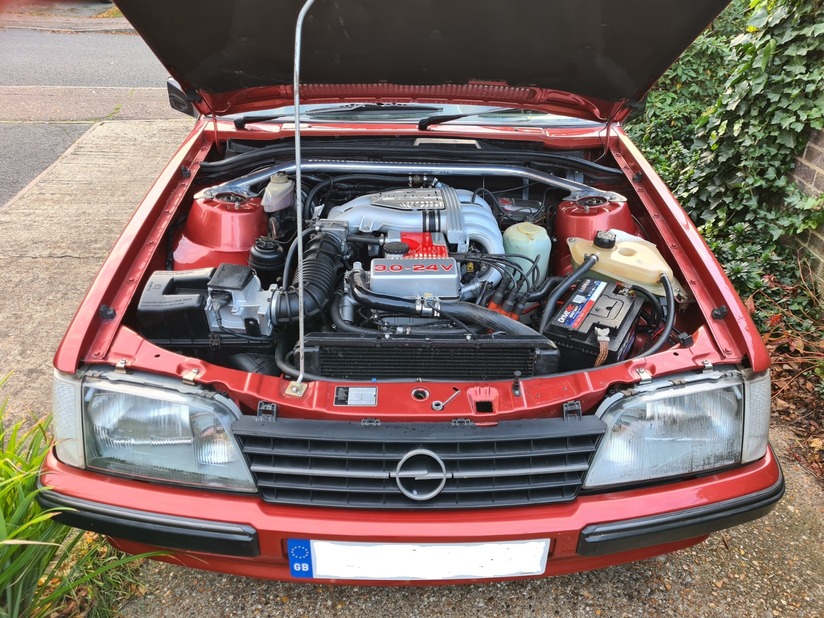
I treated her very carefully on the 220-mile journey home as the engine obviously needs running in but there was a hint of the increased oomph that’s lurking under the bonnet. The extra torque and power should make the car a lot more pleasant to drive, especially around towns, but I do look forward to giving her a bit of welly on the open road next spring!